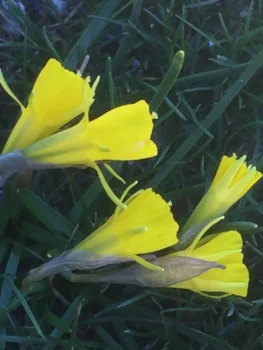
Petticoat Daffodil: A Charming Early Spring Bloomer
If you’re looking for a unique twist on the classic daffodil, the petticoat daffodil (Narcissus bulbocodium) might just catch your fancy. This diminutive bulb brings a whimsical touch to early spring gardens with its distinctive hoop skirt flowers that look quite different from your typical daffodil blooms.
What Makes Petticoat Daffodils Special
The petticoat daffodil gets its charming common name from its unique flower shape. Unlike traditional daffodils with their prominent central trumpets, this species features flowers with wide, flared coronas that resemble tiny yellow petticoats or hoop skirts. The narrow, reflexed petals frame these bell-shaped centers, creating an almost fairy-tale appearance in the garden.
As a perennial forb, this plant returns year after year from its underground bulb, making it a reliable addition to your spring display. The flowers typically appear in late winter to early spring, often when snow may still be on the ground, providing much-needed color during the dreary transition from winter to spring.
Origin and Distribution
Originally native to Spain, Portugal, and parts of North Africa, the petticoat daffodil has found its way to various parts of the world. In the United States, it has established populations in Louisiana and North Carolina, where it reproduces naturally without human intervention.
- Species observed
- No observations
While this species isn’t native to North America, it’s worth noting that there are many beautiful native alternatives that provide similar early spring interest, such as native trout lilies, spring beauties, or bloodroot, depending on your region.
Growing Conditions and Care
One of the best things about petticoat daffodils is their easy-going nature. Here’s what they need to thrive:
- Sunlight: Full sun to partial shade
- Soil: Well-drained soil is essential; they tolerate poor soils well
- Hardiness: Suitable for USDA zones 6-9
- Water: Moderate moisture during growing season, dry summer dormancy
Planting and Maintenance
Plant petticoat daffodil bulbs in fall, about 3-4 inches deep and 3-4 inches apart. Like all daffodils, they prefer to be planted before the ground freezes but after soil temperatures have cooled.
Once established, these little bulbs are remarkably low-maintenance. The key to long-term success is allowing the foliage to die back naturally after flowering. This process helps the bulb store energy for next year’s display. Resist the urge to cut back the leaves until they’ve yellowed and withered on their own.
Garden Design Ideas
Petticoat daffodils work beautifully in several garden settings:
- Rock gardens: Their compact size and tolerance for well-drained conditions make them perfect for rocky areas
- Naturalized areas: Allow them to spread naturally in less formal garden spaces
- Mediterranean-style gardens: They complement other plants from similar climates
- Containers: Their small stature works well in pots and window boxes
Wildlife and Pollinator Benefits
While small, petticoat daffodils provide valuable early-season nectar for bees and other pollinators when few other flowers are available. This early bloom time makes them particularly important for supporting beneficial insects as they emerge from winter dormancy.
Should You Grow Petticoat Daffodils?
If you’re drawn to unique, early-blooming bulbs and have appropriate growing conditions, petticoat daffodils can be a delightful addition to your garden. They’re particularly suitable for gardeners who appreciate subtle beauty over bold statements and enjoy plants with interesting forms.
However, if you’re focusing on native plant gardening, consider exploring native spring ephemerals that provide similar early-season interest while supporting local ecosystems. Many native options offer equally charming flowers and better support for local wildlife.
Regardless of your choice, the key to success with any spring bulb is proper fall planting and patience – these little treasures are well worth the wait when they emerge to herald the coming of spring.