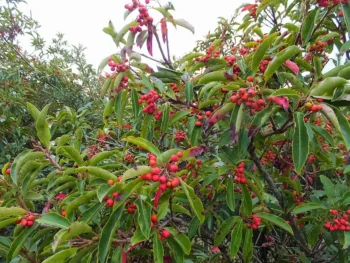
Discovering Photinia niitakayamensis: Taiwan’s Hidden Gem for Your Garden
If you’re looking to add something truly unique to your garden, let me introduce you to Photinia niitakayamensis – a lesser-known evergreen shrub that deserves more attention from adventurous gardeners. While it may not have a catchy common name that rolls off the tongue, this Taiwanese native brings year-round beauty and ecological value to the right garden setting.
What is Photinia niitakayamensis?
Photinia niitakayamensis is an evergreen shrub belonging to the rose family. You might also see it listed under its former scientific name, Stranvaesia niitakayamensis, in older gardening references. This plant hails from the mountainous regions of Taiwan, where it grows naturally in forest understories and slopes.
Where Does It Come From?
This species is native to Taiwan, specifically the Mount Niitaka region (which is reflected in its species name niitakayamensis). In its homeland, it thrives in the island’s subtropical mountain forests, adapting to varied light conditions and well-draining soils.
Why Consider Growing Photinia niitakayamensis?
Here’s what makes this plant special for your garden:
- Year-round interest: Glossy evergreen foliage provides structure in winter
- Seasonal beauty: Produces clusters of small white flowers in spring
- Wildlife value: Berries attract birds, flowers support pollinators like bees
- Manageable size: Stays relatively compact compared to other Photinia species
- Versatile use: Works as a specimen plant, informal hedge, or woodland garden accent
Garden Design Ideas
Photinia niitakayamensis shines in several garden settings:
- Asian-themed gardens: Perfect for creating authentic Taiwanese or broader Asian landscape designs
- Woodland gardens: Mimics its natural forest habitat
- Mixed shrub borders: Provides evergreen backbone among seasonal bloomers
- Specimen planting: Interesting enough to stand alone as a focal point
Growing Conditions and Care
Climate: This plant performs best in USDA hardiness zones 7-9, where it can handle moderate winter cold but appreciates protection from harsh winds.
Light requirements: Adaptable to partial shade through full sun, though it seems happiest with morning sun and afternoon protection in hotter climates.
Soil needs: Well-draining soil is essential – this mountain native doesn’t appreciate soggy roots. A slightly acidic to neutral pH works well.
Watering: Moderate moisture during the growing season, with reduced watering in winter. Once established, it shows good drought tolerance.
Planting and Care Tips
- Spacing: Allow adequate room for air circulation to prevent fungal issues
- Mulching: Apply organic mulch to retain moisture and suppress weeds
- Pruning: Light pruning after flowering to maintain shape if desired
- Fertilizing: Generally low-maintenance, but benefits from occasional organic fertilizer in spring
A Word About Sourcing
Since Photinia niitakayamensis isn’t widely available in most nurseries, you’ll likely need to seek out specialty plant retailers or botanical gardens that focus on Asian species. This rarity also means we should be mindful about sustainable sourcing – always choose nursery-propagated plants rather than wild-collected specimens.
Considering Alternatives?
If you’re drawn to the idea of supporting native ecosystems in your area, consider researching native shrubs that offer similar benefits – evergreen structure, spring flowers, and wildlife value. Your local native plant society can help you identify regional alternatives that provide the same garden roles while supporting local pollinators and wildlife.
The Bottom Line
Photinia niitakayamensis offers gardeners something genuinely different – a chance to grow a piece of Taiwan’s natural heritage while adding year-round beauty and ecological value to their landscape. While it may require a bit more effort to source than common garden center shrubs, patient gardeners will be rewarded with a unique plant that sparks conversation and supports wildlife. Just remember to provide good drainage and you’ll likely find this mountain native to be a delightful, low-maintenance addition to your garden palette.