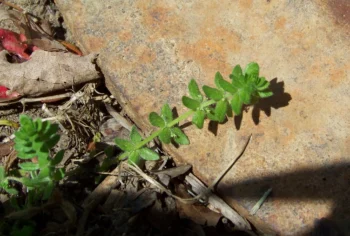
Piedmont Bedstraw: A Small but Tenacious Ground Cover
If you’ve ever spotted tiny white flowers carpeting the ground in early spring, you might have encountered piedmont bedstraw (Cruciata pedemontana). This unassuming little plant has quietly made itself at home across much of the United States, though it originally hails from far across the Atlantic.
What Is Piedmont Bedstraw?
Piedmont bedstraw is an annual forb – essentially a non-woody herbaceous plant that completes its entire life cycle in one growing season. Don’t let its delicate appearance fool you; this little plant is surprisingly adaptable and persistent. You might also see it listed under its scientific synonyms Galium pedemontanum or Vaillantia pedemontana in older botanical references.
Where You’ll Find It
Originally from Europe and the Mediterranean region, piedmont bedstraw has established itself across a remarkable range in North America. You can find it growing in Alabama, Arkansas, District of Columbia, Georgia, Idaho, Illinois, Indiana, Kansas, Kentucky, Louisiana, Maryland, Mississippi, Missouri, Montana, New York, North Carolina, Ohio, Oklahoma, Oregon, Pennsylvania, South Carolina, Tennessee, Texas, Virginia, Washington, and West Virginia.
- Species observed
- No observations
What Does It Look Like?
This low-growing plant forms spreading mats with small, delicate white flowers that appear in clusters. The flowers are tiny but numerous, creating a subtle carpet effect when the plant is in bloom. As an annual, it grows quickly in spring, flowers, sets seed, and dies back by summer’s end.
Should You Plant Piedmont Bedstraw?
Here’s where things get interesting. While piedmont bedstraw isn’t native to North America, it’s also not currently listed as invasive in most areas. This puts it in a gray zone for native plant enthusiasts. Here are some considerations:
Potential Benefits:
- Provides early spring ground cover
- Attracts small pollinators like flies and tiny bees
- Requires minimal care once established
- Adaptable to various growing conditions
Things to Consider:
- As a non-native species, it doesn’t provide the same ecological benefits as native alternatives
- Can self-seed readily and may spread beyond intended areas
- Annual nature means it disappears mid-season, leaving gaps
Growing Conditions
If you do choose to grow piedmont bedstraw, you’ll find it’s fairly accommodating. It thrives in USDA hardiness zones 3-9 and adapts to both partial shade and full sun conditions. The plant isn’t particularly fussy about soil type, making it suitable for areas where other plants might struggle.
Planting and Care Tips
Since this is an annual that readily self-seeds, growing piedmont bedstraw is more about management than intensive care:
- Allow plants to self-seed for natural regeneration
- Provide minimal supplemental watering once established
- Consider its spreading nature when choosing planting locations
- Monitor for unwanted spread beyond designated areas
Native Alternatives to Consider
If you’re drawn to the low-growing, early-blooming characteristics of piedmont bedstraw but prefer native options, consider these alternatives based on your region:
- Wild ginger (Asarum canadense) for shaded areas
- Wild strawberry (Fragaria virginiana) for sunny ground cover
- Partridgeberry (Mitchella repens) for woodland settings
- Local native sedges for naturalized areas
The Bottom Line
Piedmont bedstraw represents one of those gardening decisions that comes down to personal philosophy and garden goals. While it’s not invasive in most areas, choosing native alternatives will always provide greater ecological benefits. If you already have it growing naturally on your property, there’s no urgent need to remove it – but consider supplementing with native ground covers that will support local wildlife more effectively.
Remember, the best garden is one that reflects both your aesthetic preferences and environmental values. Whether that includes piedmont bedstraw or not is ultimately up to you!