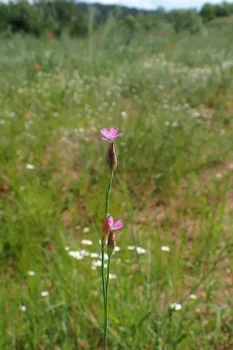
Pink (Petrorhagia): A Delicate Ground Cover for Rock Gardens
If you’ve ever wandered through a Mediterranean hillside or stumbled across a patch of tiny pink flowers sprouting from seemingly impossible cracks in pavement, you might have encountered Petrorhagia. Commonly known as pink (though don’t confuse it with the more famous garden pinks), this charming little plant has quietly made itself at home across North America.
What Makes Pink Special?
Pink is a forb herb – essentially a non-woody flowering plant that dies back to ground level each season. As both an annual and perennial (depending on conditions and species within the genus), it’s quite the survivor. The plant produces clusters of small, delicate flowers that typically range from pale pink to white, creating a soft carpet effect when established.
Where You’ll Find Pink Growing
Originally from the Mediterranean region and parts of Europe, pink has naturalized extensively across North America. You can find it growing wild in an impressive range of locations, from Alabama to British Columbia, and from California to Maine. It’s established populations in numerous states and provinces including Arkansas, California, Ontario, Quebec, Delaware, Georgia, Hawaii, Idaho, Illinois, and many others.
- Species observed
- No observations
The Garden Appeal
Pink shines in specific garden situations where other plants might struggle:
- Rock gardens: Its ability to thrive in thin, well-drained soils makes it perfect for tucking between stones
- Naturalized areas: Great for low-maintenance spaces where you want subtle color
- Drought-prone spots: Once established, it requires minimal watering
- Poor soil areas: Thrives where more finicky plants fail
Growing Conditions and Care
Pink is refreshingly low-maintenance. Here’s what it needs to thrive:
- Sunlight: Full sun exposure
- Soil: Well-drained, sandy, or rocky soils – it actually prefers poor conditions
- Water: Drought tolerant once established; avoid overwatering
- Hardiness: Generally hardy in USDA zones 3-9
- Maintenance: Minimal – it often self-seeds and spreads naturally
Pollinator and Wildlife Benefits
While pink may not be the showstopper that native wildflowers are, it does provide nectar for small pollinators like flies and small bees. The tiny flowers are perfectly sized for these smaller beneficial insects.
Should You Plant Pink?
Pink can be a useful addition to challenging garden spots, but it’s worth considering native alternatives first. Since it’s non-native (though not considered invasive), you might want to explore native ground covers that offer similar benefits while supporting local ecosystems more effectively.
Some native alternatives to consider include:
- Wild bergamot (Monarda species)
- Native sedums
- Local wildflower mixes appropriate for your region
If you do choose to grow pink, it’s likely to establish easily and require very little from you – which can be exactly what some garden spots need. Just be prepared for it to potentially spread through self-seeding, and consider whether that fits your garden goals.
The Bottom Line
Pink is one of those unassuming plants that quietly does its job without much fanfare. It’s not going to win any flower show ribbons, but it might be just the thing for that tricky spot where nothing else seems to work. Whether you choose it or opt for native alternatives, the key is finding plants that thrive in your specific conditions while supporting the kind of garden ecosystem you want to create.