Pink Woodsorrel: A Delicate Ground Cover with a Complex Story
Meet pink woodsorrel (Oxalis debilis), a charming little perennial that’s sparked quite the conversation among gardeners. With its delicate pink flowers and distinctive three-leaflet foliage, this South American native has made itself at home across much of the southern United States. But should you invite it into your garden? Let’s dig into the details.
What Exactly is Pink Woodsorrel?
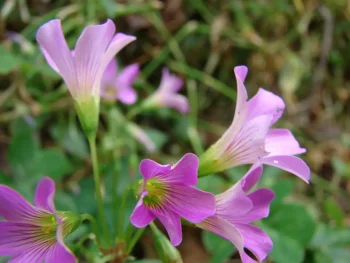
Pink woodsorrel is a low-growing perennial forb – that’s garden-speak for a soft-stemmed plant without woody tissue. Think of it as the botanical equivalent of a gentle soul who prefers to stay close to the ground rather than reach for the sky. This little charmer produces small, five-petaled pink flowers that seem to dance above heart-shaped leaflets arranged in groups of three, giving it that classic shamrock look that many Oxalis species share.
Where You’ll Find It Growing Wild
Originally from South America – specifically Argentina, southern Brazil, and Uruguay – pink woodsorrel has become a naturalized resident across the southeastern United States and beyond. You’ll find established populations in Alabama, Florida, Georgia, Hawaii, Louisiana, Mississippi, Oregon, South Carolina, Texas, Puerto Rico, and the U.S. Virgin Islands. It’s what botanists call a non-native species that reproduces on its own in the wild.
- Species observed
- No observations
The Garden Dilemma: Friend or Foe?
Here’s where things get interesting. Pink woodsorrel sits in that gray area that makes gardeners scratch their heads. It’s undeniably pretty, with its cheerful pink blooms and clover-like leaves, but it’s also incredibly good at making itself at home – sometimes a little too good.
Growing Conditions and Care
If you’re in USDA hardiness zones 8-11, pink woodsorrel will likely thrive in your garden with minimal fuss. This adaptable little plant prefers:
- Moist, well-draining soil
- Partial shade to full sun exposure
- Minimal maintenance once established
- Regular watering during dry spells
The plant spreads through both seeds and small bulbils (tiny bulb-like structures), which means it can establish new colonies relatively quickly. Its low-growing, spreading habit makes it effective as a ground cover, though this same characteristic can make it somewhat aggressive in garden settings.
Role in Your Landscape Design
Pink woodsorrel works best in informal garden settings where a naturalized look is desired. It’s not the best choice for formal landscapes or areas where you want precise control over plant placement. Consider it for:
- Naturalized woodland areas
- Informal ground cover situations
- Areas where you want low-maintenance coverage
Pollinator and Wildlife Considerations
The small pink flowers do attract some pollinators, particularly smaller insects, though pink woodsorrel isn’t considered a major pollinator plant. Its wildlife benefits are generally modest compared to native alternatives.
A Word About Native Alternatives
While pink woodsorrel isn’t inherently harmful, many gardeners prefer to support local ecosystems by choosing native plants. Consider these beautiful native alternatives that offer similar ground-covering qualities:
- Wild ginger (Asarum canadense) for shaded areas
- Partridgeberry (Mitchella repens) for woodland settings
- Native violets (Viola species) for colorful spring ground cover
The Bottom Line
Pink woodsorrel is neither a garden villain nor a must-have superstar. It’s a pleasant, low-maintenance plant that can fill a niche in informal landscapes, particularly in warmer climates. However, be prepared for its enthusiastic spreading habit, and consider whether a native alternative might better serve both your garden goals and local wildlife. If you do choose to grow it, simply keep an eye on its spread and be ready to manage it if it becomes too aggressive for your space.
Remember, the best garden is one that reflects both your personal style and environmental consciousness – and sometimes that means making thoughtful choices about which non-native plants earn a place in your landscape.