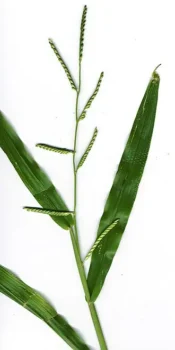
Plantain Signalgrass: What Every Gardener Should Know About This Persistent Annual Grass
If you’ve ever wondered about that coarse, somewhat unruly grass popping up in your garden beds or lawn edges, you might be looking at plantain signalgrass (Urochloa plantaginea). This annual grass has quite the talent for showing up uninvited, and while it’s not necessarily a garden villain, it’s definitely not winning any beauty contests either.
The Basics: What Is Plantain Signalgrass?
Plantain signalgrass is an annual grass that belongs to the same family as many of our beloved lawn grasses, but don’t let that fool you into thinking it’s a welcome addition to your landscape. You might also see it listed under its old scientific names, Brachiaria plantaginea or Panicum plantagineum, if you’re diving deep into botanical references.
This grass is what botanists call a graminoid – essentially a fancy way of saying it’s a grass or grass-like plant. It completes its entire life cycle in one growing season, which means it sprouts, grows, flowers, sets seed, and dies all within a single year.
Where You’ll Find It (Whether You Want To Or Not)
Originally hailing from South America, plantain signalgrass has made itself quite at home across the warmer regions of the United States. You’ll find it established in Alabama, Arkansas, Florida, Georgia, Hawaii, Louisiana, Maryland, Mississippi, New Jersey, Pennsylvania, South Carolina, Texas, and Puerto Rico.
- Species observed
- No observations
This adaptable grass thrives in USDA hardiness zones 8-11, preferring the warm, subtropical to tropical climates where it can complete its annual cycle without getting knocked back by harsh freezes.
The Wet and Dry of It: Moisture Preferences
Here’s where plantain signalgrass shows its adaptable nature. Depending on where you are geographically, this grass has different relationships with water:
- In the Atlantic and Gulf Coastal Plain regions, it’s facultative – meaning it’s equally happy in wet or dry spots
- In the Caribbean and Hawaii, it’s an obligate upland plant, almost never found in wetlands
- In the Eastern Mountains and Piedmont, again it’s facultative
- In the Great Plains, it leans toward drier areas but can tolerate some moisture
- In the Northcentral and Northeast regions, it’s back to being facultative
Should You Plant Plantain Signalgrass?
Here’s the straight talk: you probably shouldn’t intentionally plant plantain signalgrass in your garden. While it’s not officially listed as invasive or noxious, it’s definitely not what you’d call ornamental. This grass has a coarse texture and tends to look, well, weedy. It’s the kind of plant that shows up on its own in disturbed soils, neglected corners, and along pathways.
If you’re looking for the ecological benefits of native grasses without the uninvited guest situation, consider these native alternatives instead:
- Little bluestem (Schizachyrium scoparium) for prairie-style gardens
- Buffalo grass (Poaceae dactyloides) for low-maintenance lawns in appropriate climates
- Purple three-awn (Aristida purpurea) for xeriscaping
If It’s Already There: Managing Plantain Signalgrass
Since this is an annual grass, the good news is that it won’t stick around forever if you can prevent it from going to seed. If you find plantain signalgrass in your garden:
- Hand-pull young plants before they flower and set seed
- Maintain healthy, thick turf or ground cover to prevent establishment
- Improve soil conditions and reduce disturbance where possible
- Consider overseeding with desired native grasses to outcompete unwanted species
The Wildlife Perspective
As a wind-pollinated grass, plantain signalgrass doesn’t offer much in the way of pollinator support. It’s not particularly valuable to wildlife compared to native grass species that have co-evolved with local ecosystems over thousands of years.
Final Thoughts: Embracing Better Alternatives
While plantain signalgrass isn’t going to harm your garden, it’s not going to elevate it either. If you’re passionate about supporting local ecosystems and creating beautiful landscapes, investing in native grass species will give you much better returns. Native grasses typically offer superior wildlife value, better drought tolerance once established, and that authentic sense of place that makes a garden truly special.
Remember, the best gardens work with nature, not against it. By choosing plants that belong in your local ecosystem, you’re creating a landscape that’s not only beautiful but also beneficial to the web of life in your area.