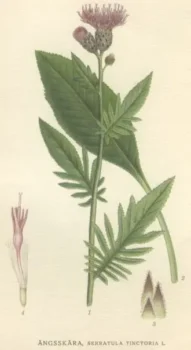
Plumeless Saw-wort: A European Wildflower Finding Its Place in American Gardens
Meet plumeless saw-wort (Serratula), a charming perennial that’s been quietly making itself at home in select corners of the northeastern United States. While this purple-flowered beauty isn’t a native to our shores, it’s managed to establish itself in Connecticut and New York, bringing a touch of European wildflower charm to American landscapes.
What Exactly Is Plumeless Saw-wort?
Plumeless saw-wort is a herbaceous perennial forb – essentially a non-woody plant that comes back year after year. True to its name, this plant sports distinctively serrated (saw-toothed) leaves that give it character even when not in bloom. Unlike some of its more aggressive thistle relatives, plumeless saw-wort tends to be a well-behaved garden citizen.
Native Status and Geographic Distribution
Originally hailing from Europe and Asia, Serratula is considered a non-native species in North America. It has established naturalized populations and reproduces on its own in Connecticut and New York, where it has found suitable growing conditions.
- Species observed
- No observations
Garden Appeal and Landscape Role
What makes plumeless saw-wort interesting to gardeners? Here are its standout features:
- Purple thistle-like flowers that bloom in late summer
- Distinctive serrated foliage that adds texture
- Relatively compact growth habit compared to other saw-wort species
- Drought tolerance once established
In garden design, this plant works well in cottage gardens, wildflower meadows, and naturalized areas where its somewhat wild appearance feels at home. It’s not typically a showstopper, but rather a supporting player that adds authentic wildflower character.
Wildlife and Pollinator Benefits
The purple blooms of plumeless saw-wort are quite attractive to pollinators, particularly butterflies and bees. Like many members of the aster family, the flowers provide a valuable nectar source during their blooming period in late summer when many other wildflowers are winding down.
Growing Conditions and Care
Plumeless saw-wort is refreshingly low-maintenance:
- Sunlight: Full sun to partial shade
- Soil: Well-drained soils; not particularly picky about soil type
- Water: Drought tolerant once established
- USDA Hardiness Zones: 4-8
Planting and Care Tips
Growing plumeless saw-wort is fairly straightforward:
- Plant in spring after the last frost
- Space plants appropriately to allow for air circulation
- Water regularly the first year to help establish roots
- Cut back spent flowers to prevent excessive self-seeding if desired
- Minimal fertilization needed – too much can lead to weak, floppy growth
Should You Grow Plumeless Saw-wort?
While plumeless saw-wort isn’t invasive or problematic, it’s worth considering native alternatives that provide similar benefits while supporting local ecosystems more directly. Some excellent native options include:
- Wild bergamot (Monarda fistulosa)
- New England aster (Symphyotrichum novae-angliae)
- Purple coneflower (Echinacea purpurea)
If you do choose to grow plumeless saw-wort, it can be a pleasant addition to informal garden areas where its modest charm and pollinator appeal can shine. Just keep an eye on its self-seeding tendencies and be prepared to manage any unwanted spread.
The Bottom Line
Plumeless saw-wort represents one of those plants that sits in the interesting middle ground – not native, but not necessarily problematic either. It’s a plant that might appeal to gardeners looking for something a bit different, especially those drawn to European-style cottage gardens or wildflower meadows. While native alternatives might serve your local ecosystem better, there’s something to be said for a plant that asks for little and delivers modest, reliable charm year after year.