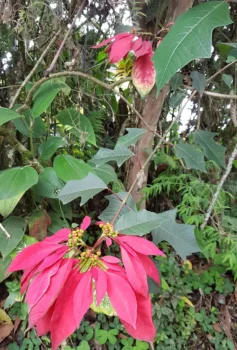
Poinsettia: The Festive Holiday Plant That’s More Than Meets the Eye
When December rolls around, you’ll spot poinsettias (Euphorbia pulcherrima) practically everywhere – from grocery store displays to office lobbies. But there’s more to this cheerful plant than its reputation as a seasonal decoration. Whether you’re considering adding one to your garden or just curious about that festive plant on your windowsill, let’s dive into what makes poinsettias tick.
What Exactly Is a Poinsettia?
Despite what many people think, those vibrant red petals aren’t actually flowers at all! They’re specialized leaves called bracts that change color to attract pollinators to the tiny yellow flowers nestled in the center. This perennial shrub can grow quite impressive in its ideal conditions – we’re talking up to 13-16 feet tall, though most indoor varieties stay much more manageable.
You might also see poinsettias listed under their botanical synonym Poinsettia pulcherrima, but Euphorbia pulcherrima is the current accepted name.
Where Do Poinsettias Come From?
Here’s something that might surprise you: poinsettias aren’t native to the United States. These beauties originally hail from the tropical deciduous forests of Mexico and Central America. In the U.S., they’ve established themselves in Hawaii, Guam, Palau, Puerto Rico, and some U.S. Minor Outlying Islands, where they can reproduce and persist on their own in the wild.
- Species observed
- No observations
Should You Plant a Poinsettia in Your Garden?
The answer depends on where you live and what you’re hoping to achieve. Since poinsettias are non-native plants, they won’t provide the same ecological benefits as indigenous species. However, they’re not considered invasive or problematic, so there’s no harm in growing them if you enjoy their dramatic winter display.
Reasons you might want to grow poinsettias:
- Stunning seasonal color when most plants are dormant
- Relatively low maintenance once established
- Can serve as an attractive container plant
- Adds festive appeal to holiday landscaping
Considerations before planting:
- Limited wildlife and pollinator benefits compared to native alternatives
- Only hardy in USDA zones 9-11 for year-round outdoor growing
- Requires specific conditions to maintain colorful bracts
Growing Conditions and Care
Poinsettias are somewhat particular about their growing conditions, but once you understand their preferences, they’re quite manageable.
Climate Requirements: These plants thrive in USDA hardiness zones 9-11. In colder areas, treat them as houseplants or seasonal container plants that you can move indoors when temperatures drop.
Light and Location: Poinsettias prefer bright, indirect light. Too much direct sunlight can fade their colorful bracts, while too little light prevents proper color development.
Soil and Water: Well-draining soil is crucial – these plants hate soggy feet. Water when the top inch of soil feels dry, but don’t let them completely dry out. According to wetland status data, poinsettias are obligate upland plants in most regions, meaning they almost never occur in wet conditions.
Temperature: Keep them comfortable between 65-75°F. Avoid placing them near heating vents, air conditioners, or drafty areas.
Planting and Care Tips
Fertilizing: Feed regularly during the growing season with a balanced fertilizer, but reduce feeding in winter when growth slows.
Pruning: After the colorful bracts fade, you can prune the plant back to encourage bushier growth. Don’t be afraid to cut it back significantly – poinsettias respond well to pruning.
Getting Those Colorful Bracts: Here’s the tricky part – poinsettias need about 14 hours of darkness daily for 6-8 weeks to develop their signature colored bracts. This is why they naturally bloom around the holidays when daylight hours are shortest.
Native Alternatives to Consider
If you’re looking to support local ecosystems while still getting winter interest in your garden, consider these native alternatives that offer seasonal appeal:
- Native holly species for red berries
- Winterberry for bright red fruit
- Native dogwood varieties for winter stem color
- Regional native shrubs with interesting winter bark or persistent fruit
The Bottom Line
Poinsettias can be a lovely addition to your plant collection, especially if you enjoy their festive winter display. While they won’t provide the ecological benefits of native plants, they’re not harmful to grow either. If you live in zones 9-11, they can be a relatively low-maintenance shrub for your landscape. In colder areas, they make charming houseplants that can brighten up those long winter months.
Just remember – whether you’re growing them indoors or out, success with poinsettias comes down to understanding their specific needs for light, water, and temperature. Give them what they want, and they’ll reward you with those stunning colorful displays that make the holiday season just a little more cheerful.