Poisonbulb: A Striking but Controversial Addition to Your Garden
Meet the poisonbulb (Crinum asiaticum), a plant that’s as dramatic as its ominous name suggests. Also known as spider lily, this eye-catching perennial has been making itself at home in parts of the southeastern United States, despite being far from its Asian origins. While it’s certainly a showstopper in the garden, there are some important things to consider before adding this exotic beauty to your landscape.
What Exactly Is Poisonbulb?
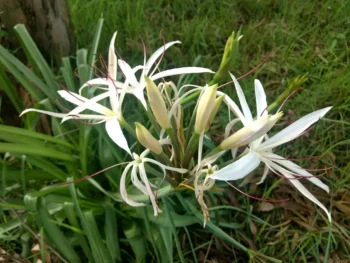
Poisonbulb is a herbaceous perennial that belongs to the amaryllis family. Don’t let the forb classification fool you – this isn’t your average wildflower. It’s a robust plant that forms impressive clumps of long, strap-like leaves arranged in an attractive rosette pattern. The real magic happens when it blooms, producing clusters of large, fragrant white flowers with distinctively long, narrow petals that give it that spider lily nickname.
Where You’ll Find It Growing Wild
Originally from Southeast Asia, poisonbulb has established itself in several U.S. locations, including Florida, Louisiana, Guam, Palau, and various U.S. Minor Outlying Islands. It’s what botanists call a non-native species that has managed to reproduce and persist in the wild without human intervention.
- Species observed
- No observations
The Garden Appeal (And the Catch)
There’s no denying that poisonbulb brings serious visual impact to any landscape. Here’s what makes it attractive:
- Spectacular white blooms that release their fragrance in the evening
- Bold, tropical appearance that works well in subtropical and coastal gardens
- Thrives in wet conditions where many other ornamentals struggle
- Attracts nighttime pollinators like moths with its evening-scented flowers
- Works beautifully as a specimen plant or in waterside plantings
However, since it’s not native to most areas where it’s grown, it doesn’t provide the same ecological benefits as indigenous plants. Its wetland status varies by region – it typically grows in non-wetland areas in the Atlantic and Gulf Coastal Plain but sticks to upland areas in the Caribbean.
Growing Conditions and Care
If you’re in USDA hardiness zones 9-11 and decide to give poisonbulb a try, here’s what it needs to thrive:
- Light: Full sun to partial shade
- Soil: Moist to wet soils; it can even tolerate periodic flooding
- Water: Consistent moisture is key – this isn’t a drought-tolerant plant
- Planting: Plant bulbs in spring after the last frost
- Maintenance: Divide clumps every few years to prevent overcrowding
Should You Plant It?
This is where things get a bit complex. Poisonbulb isn’t currently listed as invasive or noxious, which means it’s not actively harmful to local ecosystems. However, as a non-native species, it’s not contributing to local biodiversity the way indigenous plants would.
If you love the tropical look and have the right growing conditions, poisonbulb can certainly add drama to your landscape. Just remember that native alternatives might offer similar beauty while supporting local wildlife and ecosystems more effectively.
Native Alternatives to Consider
Before committing to poisonbulb, consider exploring native plants that might give you a similar aesthetic appeal while supporting local pollinators and wildlife. Your local native plant society or extension office can help you identify indigenous species that would thrive in your specific conditions and provide the bold, tropical look you’re after.
The choice is ultimately yours, but whatever you decide, make sure you’re prepared to give this moisture-loving perennial the consistently wet conditions it craves to truly shine in your garden.