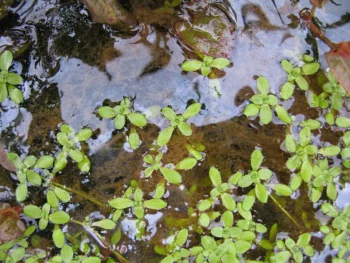
Pond Water-Starwort: A Pretty But Problematic Aquatic Plant
If you’ve ever spotted tiny star-shaped leaves floating delicately on a pond’s surface, you might have encountered pond water-starwort (Callitriche stagnalis). While this little aquatic plant has an undeniable charm with its miniature rosettes and gentle floating habit, there’s more to this story than meets the eye.
What is Pond Water-Starwort?
Pond water-starwort is a small perennial forb that lives life almost entirely in the water. Think of it as nature’s version of a tiny floating garden – each plant forms delicate rosettes of leaves that can either float on the water’s surface or grow completely submerged. It’s the kind of plant that looks innocent enough, creating what appears to be a natural carpet of green stars across quiet waters.
The Geographic Spread
Originally from Europe, pond water-starwort has made itself quite at home across North America. You can find it established in states ranging from Alabama to Wisconsin, and from California to New York, plus several Canadian provinces including British Columbia and Quebec.
- Species observed
- No observations
Here’s the Catch: It’s Not Playing Nice
While pond water-starwort might look like a charming addition to water gardens, it comes with some serious baggage. This plant is classified as non-native throughout its North American range, and here’s the kicker – Connecticut has labeled it as Potentially Invasive and Prohibited. That’s bureaucratic speak for this plant could cause problems, so don’t plant it.
As an obligate wetland plant (meaning it almost always lives in wetlands), pond water-starwort is perfectly adapted to aquatic life. Unfortunately, this adaptation means it can quickly establish itself in natural water bodies where it doesn’t belong, potentially crowding out native aquatic plants that local wildlife depends on.
Growing Conditions and Characteristics
If you’re curious about what makes this plant tick, pond water-starwort thrives in:
- Shallow freshwater environments
- Still or slow-moving water
- Full sun to partial shade conditions
- Cool to temperate climates (USDA zones 3-9)
The plant spreads naturally once established and doesn’t need much human intervention to keep going – which is part of what makes it potentially problematic in non-native environments.
Why You Should Think Twice
Here’s the thing about pond water-starwort: it’s a classic example of a plant that looks harmless but can upset the ecological apple cart. When non-native aquatic plants establish themselves in local waterways, they can:
- Outcompete native plants that provide food and habitat for local wildlife
- Change water chemistry and oxygen levels
- Create dense mats that interfere with natural water flow
Better Alternatives for Your Water Garden
Instead of risking ecological disruption, consider these native alternatives for your aquatic gardens:
- Native water lilies (Nymphaea species)
- Arrowhead (Sagittaria latifolia)
- Pickerel rush (Pontederia cordata)
- Wild celery (Vallisneria americana)
These native options will give you that beautiful aquatic garden aesthetic while supporting local ecosystems and wildlife.
The Bottom Line
Pond water-starwort might look like a innocent floating star, but it’s one of those plants where the responsible choice is to admire it from a distance and choose native alternatives instead. Your local ecosystem (and your state’s environmental regulators) will thank you for making the eco-friendly choice. After all, the best gardens are those that work in harmony with their natural surroundings, not against them.