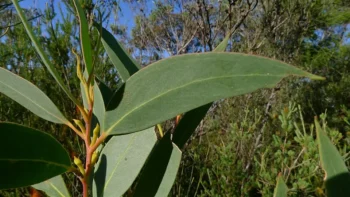
Port Jackson Mallee: A Mysterious Eucalyptus Worth Investigating
If you’ve stumbled across the name Port Jackson mallee or its scientific designation Eucalyptus obstans, you might be wondering what exactly this plant is and whether it belongs in your garden. Well, you’re not alone in your curiosity – this particular eucalyptus species seems to be quite the botanical mystery!
What We Know (And Don’t Know)
Port Jackson mallee (Eucalyptus obstans) appears to be a member of the vast eucalyptus family, which includes over 800 species of flowering trees and shrubs. The name suggests a connection to the Port Jackson area of Australia, which encompasses Sydney Harbour and surrounding regions. However, detailed information about this specific species is remarkably scarce in botanical literature.
The term mallee typically refers to eucalyptus species that grow as multi-stemmed shrubs rather than single-trunked trees, often found in semi-arid regions of Australia. These plants are known for their ability to regenerate from underground root systems called lignotubers after fires or other disturbances.
Geographic Distribution
While the common name suggests origins near Port Jackson (Sydney area) in New South Wales, Australia, specific distribution data for Eucalyptus obstans is not readily available in standard botanical references.
A Word of Caution for Gardeners
Here’s where things get interesting – and a bit concerning for gardeners. The limited information available about Eucalyptus obstans raises some red flags:
- It may be an extremely rare species requiring special conservation consideration
- It could be a regional common name that doesn’t correspond to the accepted botanical nomenclature
- The plant identification might need verification by botanical experts
Before You Plant
If you’re considering adding this plant to your garden, we strongly recommend taking these steps first:
- Verify the plant identification with local botanical experts or native plant societies
- Check with your regional eucalyptus specialist or arboretum
- Ensure any plant material is sourced responsibly and legally
- Investigate whether this might be a local name for a more common eucalyptus species
Alternative Eucalyptus Options
If you’re drawn to the idea of growing a mallee-form eucalyptus, consider these better-documented alternatives that might be suitable for your region:
- Eucalyptus torquata (Coral Gum) – compact with striking coral-pink flowers
- Eucalyptus caesia (Gungurru) – pendulous branches with pink buds and white flowers
- Eucalyptus kruseana (Book Leaf Mallee) – small silver-leaved species with yellow flowers
The Bottom Line
While the mystery surrounding Port Jackson mallee makes it intriguing, the lack of reliable growing information makes it a risky choice for most gardeners. Until more definitive botanical information becomes available, you might be better served exploring well-documented eucalyptus species that can provide similar aesthetic appeal with proven garden performance.
If you do encounter this plant or have reliable information about Eucalyptus obstans, consider reaching out to botanical institutions – you might be contributing valuable data to our understanding of Australian flora!