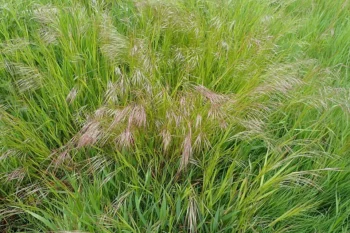
Poverty Brome: An Uninvited Guest in North American Gardens
If you’ve spotted a scraggly, sparse-looking grass taking up residence in the less-maintained corners of your garden, you might be looking at poverty brome (Bromus sterilis). This annual grass didn’t exactly receive an invitation to North America – it made its own way here from the Mediterranean region and has been making itself at home ever since.
What is Poverty Brome?
Poverty brome is a non-native annual grass that has naturalized across most of North America. True to its rather unflattering common name, this plant tends to thrive in poor soils and disturbed areas where other plants might struggle. It’s one of those hardy pioneers that shows up uninvited but manages to stick around.
You might also encounter this plant listed under its synonym, Anisantha sterilis, in some botanical references, though Bromus sterilis remains the accepted scientific name.
Where You’ll Find It
This adaptable grass has spread extensively across the continent, establishing populations in Alabama, Arizona, Arkansas, British Columbia, California, Colorado, Connecticut, Delaware, District of Columbia, Hawaii, Idaho, Illinois, Indiana, Kentucky, Maryland, Massachusetts, Michigan, Mississippi, Missouri, Nevada, New Jersey, New Mexico, New York, North Carolina, Ohio, Oklahoma, Ontario, Oregon, Pennsylvania, Rhode Island, Tennessee, Texas, Utah, Virginia, Washington, and West Virginia.
- Species observed
- No observations
Should You Plant Poverty Brome?
Here’s the thing about poverty brome – most gardeners don’t actually choose to plant it. It tends to choose them instead! While it’s not typically considered highly invasive or particularly problematic, it’s also not going to win any beauty contests in your garden.
This grass offers minimal ornamental value and provides little benefit to pollinators since it’s wind-pollinated. If you’re looking for grasses to intentionally include in your landscape, you’d be much better served by native alternatives that support local wildlife and offer superior aesthetic appeal.
Growing Conditions and Characteristics
If poverty brome has already made itself at home in your garden, here’s what you can expect:
- Thrives in poor, disturbed soils
- Drought tolerant once established
- Annual growth cycle
- Self-seeds readily
- Adaptable to a wide range of climates (USDA zones 4-10)
The plant tends to appear in areas with minimal soil fertility and can handle neglect quite well – perhaps too well for most gardeners’ preferences!
Better Native Alternatives
Instead of letting poverty brome take over those challenging spots in your garden, consider these native grass alternatives that offer similar hardiness with much greater benefits:
- Buffalo grass for drought-prone areas
- Little bluestem for ornamental appeal
- Blue grama for low-maintenance ground cover
- Native fescue species for cool-season growth
Managing Poverty Brome
If you’re dealing with unwanted poverty brome in your garden, the good news is that as an annual, it relies on seed production to persist. Regular mowing or cutting before it sets seed can help reduce future populations. For a more permanent solution, establishing competitive native plants in the area will help crowd it out naturally.
Remember, every garden challenge is an opportunity to create something better – and choosing native alternatives will give you a landscape that’s both beautiful and beneficial to local wildlife.