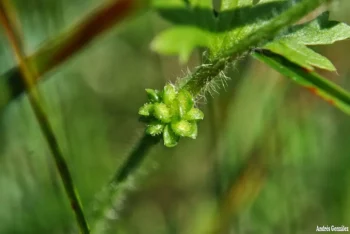
Prairie Buttercup: A Small Non-Native Wildflower You Might Encounter
If you’ve spotted tiny yellow buttercup flowers popping up in your yard or local wild spaces across the Southeast, you might be looking at prairie buttercup (Ranunculus platensis). This diminutive annual wildflower has quietly made itself at home in several southern states, though it’s not originally from North America.
What Is Prairie Buttercup?
Prairie buttercup is a small annual forb—basically a non-woody flowering plant that completes its entire life cycle in one growing season. Like other members of the buttercup family, it produces cheerful yellow flowers, though they’re quite petite compared to showier garden varieties. The plant lacks any significant woody tissue and stays relatively low to the ground.
Where You’ll Find It
Originally from South America (the name platensis refers to the Rio de la Plata region), prairie buttercup has established itself across several southeastern states. You can find it growing wild in Alabama, Florida, Georgia, Louisiana, Mississippi, North Carolina, and Texas. It reproduces on its own and persists without any human intervention.
- Species observed
- No observations
Growing Habits and Characteristics
This adaptable little plant is quite the generalist when it comes to moisture conditions. It can handle both wet and dry situations, making it equally at home in seasonal wetlands and well-drained upland areas. This flexibility helps explain why it’s been successful at establishing itself across diverse southeastern landscapes.
As an annual, prairie buttercup completes its entire life cycle within one year—germinating, growing, flowering, setting seed, and dying back. It’s likely hardy in USDA zones 8-10, based on where it currently grows.
Garden and Landscape Role
Let’s be honest—prairie buttercup isn’t going to win any garden beauty contests. Its flowers are small and the plant itself has a somewhat weedy appearance. It’s not commonly sold in nurseries or deliberately planted in gardens. Most gardeners encounter it as a volunteer plant that shows up on its own.
While it may provide some nectar for small pollinators, it’s not a significant wildlife plant compared to native alternatives.
Should You Plant Prairie Buttercup?
Since prairie buttercup isn’t native to North America and doesn’t offer exceptional garden value, you might want to consider native alternatives instead. Here are some beautiful native buttercup relatives that would serve your garden and local wildlife much better:
- Swamp buttercup (Ranunculus hispidus) – A native with bright yellow flowers
- Bulbous buttercup relatives – Various native Ranunculus species depending on your region
- Other native spring wildflowers – Like wild ginger, trout lily, or bloodroot
If You Decide to Tolerate It
If prairie buttercup has already established itself in your landscape and you don’t mind its presence, it requires virtually no care. As an annual that naturalizes readily, it will manage itself. Just keep in mind that while it’s not currently listed as invasive, any non-native plant has the potential to become problematic over time.
The Bottom Line
Prairie buttercup is one of those plants that’s more interesting from an ecological perspective than a gardening one. While it’s not causing major problems in its introduced range, it’s also not adding much value compared to native alternatives. If you’re planning a native garden or pollinator habitat, you’ll get much more bang for your buck with indigenous wildflowers that co-evolved with local wildlife.
Consider it a reminder that nature is always full of surprises—sometimes in the form of tiny South American buttercups that decided to make themselves at home in the American South!