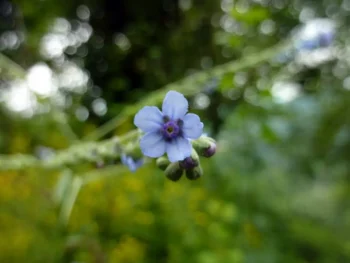
Prickly Hound’s Tongue: A Rare Non-Native Biennial Worth Knowing
If you’ve stumbled across the name prickly hound’s tongue in your plant research, you’ve discovered one of those botanical mysteries that keeps plant enthusiasts intrigued. Cynoglossum glochidiatum, as it’s known scientifically, is a rather elusive member of the borage family that has quietly made its home in North American gardens and wild spaces.
What Exactly Is Prickly Hound’s Tongue?
Prickly hound’s tongue is a biennial forb, which simply means it’s a non-woody flowering plant that completes its life cycle over two years. In its first year, it focuses on growing leaves and establishing roots, then flowers and sets seed in its second year before dying. Like other plants in the borage family, it’s related to forget-me-nots and comfrey, though it has its own unique characteristics.
This plant goes by a few different scientific names in older botanical literature, including Cynoglossum wallichii, so don’t be surprised if you see it listed under various synonyms in different sources.
Where Does It Grow?
Here’s where things get interesting – and a bit puzzling. Prickly hound’s tongue is currently documented as growing in Massachusetts, making it quite geographically limited in North America. As a non-native species that was introduced from elsewhere, it has managed to establish itself and reproduce without human intervention, but apparently hasn’t spread widely across the continent.
- Species observed
- No observations
Should You Grow Prickly Hound’s Tongue?
This is where we hit a bit of a gardening conundrum. While prickly hound’s tongue isn’t listed as invasive or noxious, there’s remarkably little information available about its garden performance, growing requirements, or ecological impact. For most gardeners, this makes it a less-than-ideal choice simply because success would be hard to predict.
Instead of taking a chance on this botanical enigma, consider these native alternatives that offer similar charm:
- Wild bergamot (Monarda fistulosa) – A native biennial with fragrant foliage and pollinator-friendly flowers
- Wild comfrey (Symphytum × uplandicum) – Though technically a hybrid, it’s well-established and offers similar borage family characteristics
- Virginia bluebells (Mertensia virginica) – Another borage family member that’s absolutely stunning in spring gardens
The Mystery of Growing Conditions
Unfortunately, specific growing requirements for prickly hound’s tongue remain largely undocumented in readily available gardening resources. We know it’s a forb that can establish itself in the wild, suggesting it’s probably fairly adaptable, but without concrete information about soil preferences, light requirements, or hardiness zones, growing it successfully would be mostly guesswork.
The Bottom Line
Prickly hound’s tongue represents one of those fascinating botanical puzzles that remind us how much we still don’t know about the plant world. While it’s not harmful to grow (as far as we know), the lack of cultivation information makes it a risky choice for gardeners who want predictable results.
If you’re drawn to unusual plants with mysterious backgrounds, you might find prickly hound’s tongue intriguing. However, for most gardeners looking to create successful, wildlife-friendly landscapes, focusing on well-documented native species will yield better results and provide clearer benefits to local ecosystems.
Sometimes the most interesting plants are the ones that keep their secrets – and prickly hound’s tongue certainly falls into that category.