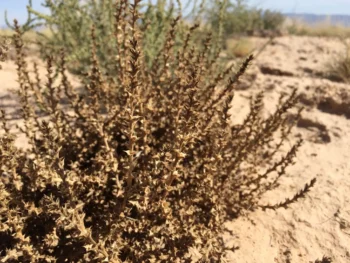
Prickly Russian Thistle: The Infamous Tumbleweed You Don’t Want in Your Garden
If you’ve ever watched a Western movie, you’ve probably seen the iconic tumbleweed rolling across the desert landscape. That famous plant is likely Salsola tragus, commonly known as prickly Russian thistle or simply tumbleweed. While it might look romantic on the silver screen, this spiky annual is definitely not something most gardeners want taking up residence in their carefully tended landscapes.
What Exactly Is Prickly Russian Thistle?
Despite its common name suggesting Russian origins, prickly Russian thistle is actually native to Eurasia, spanning Eastern Europe and Western Asia. This non-native annual forb has made itself quite at home across North America, where it reproduces spontaneously in the wild and tends to persist without any human help.
As an annual plant, prickly Russian thistle completes its entire life cycle in one growing season. It’s classified as a forb, meaning it’s a herbaceous plant without significant woody tissue above ground. Don’t let the word thistle fool you though – it’s not actually related to true thistles, despite its prickly nature.
Where You’ll Find This Wandering Weed
Prickly Russian thistle has an impressively wide distribution across North America. You can find it established in virtually every U.S. state and most Canadian provinces, from Alberta to Nova Scotia, and from Alaska all the way down to Hawaii. It’s particularly common in the western United States, where the dry climate suits its preferences perfectly.
- Species observed
- No observations
What Does It Look Like?
This plant starts life as a small, rather innocent-looking seedling, but don’t be fooled. As it matures, prickly Russian thistle develops into a bushy, rounded plant that can reach 2-4 feet tall and equally wide. The leaves are narrow and succulent when young, but as the plant ages, they become small, sharp, and spine-tipped – hence the prickly part of its name.
The flowers are tiny and inconspicuous, usually greenish or pinkish, and appear in small clusters along the branches. Since this plant is wind-pollinated rather than insect-pollinated, it doesn’t need showy flowers to attract pollinators. After the growing season ends, the entire plant breaks off at ground level and becomes the classic tumbleweed, rolling around to disperse its seeds.
Growing Conditions and Habitat
Prickly Russian thistle is remarkably adaptable and thrives in conditions that would challenge many other plants. It prefers:
- Full sun exposure
- Poor, sandy, or alkaline soils
- Dry conditions (it’s very drought tolerant)
- Disturbed areas like roadsides, vacant lots, and overgrazed pastures
According to wetland status classifications, this plant is considered Facultative Upland in most regions, meaning it usually occurs in non-wetlands but may occasionally appear in wetland areas. In Hawaii, it’s classified as Obligate Upland, almost never occurring in wetlands.
Why You Probably Don’t Want This Plant
While prickly Russian thistle is undeniably tough and drought-tolerant, there are several reasons why it’s not recommended for intentional cultivation:
- Limited aesthetic appeal: Let’s be honest – it’s not winning any beauty contests with its spiky, rough texture and tiny flowers
- Aggressive self-seeding: One plant can produce thousands of seeds that spread far and wide
- Prickly nature: Those spines can be painful and make handling difficult
- Weedy behavior: It tends to take over disturbed areas and can crowd out more desirable plants
- Minimal wildlife benefits: It provides little value to pollinators or wildlife compared to native alternatives
Better Native Alternatives
Instead of planting prickly Russian thistle, consider these native alternatives that offer drought tolerance with much more garden value:
- Desert Marigold (Baileya multiradiata) for sunny yellow flowers
- Purple Prairie Clover (Dalea purpurea) for pollinator benefits
- Blue Grama Grass (Bouteloua gracilis) for drought-tolerant groundcover
- Blanket Flower (Gaillardia aristata) for colorful, long-lasting blooms
If It Shows Up Anyway
Despite your best efforts, prickly Russian thistle might still appear in your garden, especially in disturbed soil areas. If it does, the best approach is to remove young plants before they mature and set seed. Wear gloves and long sleeves to protect yourself from the prickles, and be sure to get the entire root system.
The good news? As an annual, it won’t regrow from the roots once removed, though you may need to deal with seedlings from the soil seed bank for a few years.
The Bottom Line
While prickly Russian thistle has certainly earned its place in Western folklore and movie history, it’s not a plant that most gardeners should intentionally invite into their landscapes. Its aggressive nature, limited ornamental value, and prickly disposition make it better suited for wide-open spaces rather than cultivated gardens. If you’re looking for drought-tolerant plants for your garden, you’ll find much better options among native species that offer beauty, wildlife benefits, and good garden manners.