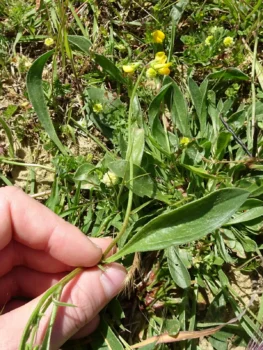
Prickly Scorpion’s-Tail: An Unusual Annual with Quirky Seed Pods
If you’re looking for a conversation starter in your garden, prickly scorpion’s-tail (Scorpiurus muricatus) might just be the quirky annual you never knew you needed. This Mediterranean native brings an element of the unusual to gardens with its distinctive curved seed pods that really do look like tiny scorpion tails – hence the memorable common name!
What Is Prickly Scorpion’s-Tail?
Prickly scorpion’s-tail is a non-native annual forb that belongs to the legume family. As a forb, it’s an herbaceous plant without woody stems, completing its entire life cycle in a single growing season. You might also encounter this plant listed under its botanical synonyms Scorpiurus sulcatus or Scorpiurus subvillosus in older gardening references.
Where Does It Grow?
Originally from the Mediterranean region, prickly scorpion’s-tail has established itself in parts of the eastern United States. Currently, you can find naturalized populations in Delaware, Massachusetts, and Pennsylvania, where it reproduces spontaneously without human intervention.
- Species observed
- No observations
Why Grow Prickly Scorpion’s-Tail?
This little annual offers several appealing qualities for adventurous gardeners:
- Unique aesthetic appeal: Small, bright yellow pea-like flowers followed by fascinating curved seed pods
- Low maintenance: Once established, it’s quite drought tolerant and requires minimal care
- Pollinator friendly: The flowers attract small bees and other beneficial insects
- Conversation piece: The unusual seed pods never fail to intrigue garden visitors
Garden Uses and Design Role
Prickly scorpion’s-tail works well in several garden settings:
- Rock gardens: Its drought tolerance makes it perfect for well-drained, sunny spots
- Mediterranean-style gardens: Fits naturally with other drought-tolerant, sun-loving plants
- Annual borders: Adds textural interest and unusual form
- Children’s gardens: The quirky seed pods fascinate young gardeners
As a low-growing ground cover, it typically reaches heights of 6-12 inches with a similar spread, making it suitable for front-of-border plantings.
Growing Conditions and Care
Prickly scorpion’s-tail is refreshingly easy to grow:
- Light: Full sun for best flowering and pod development
- Soil: Well-drained soils; tolerates poor, rocky conditions
- Water: Drought tolerant once established; avoid overwatering
- USDA Zones: Grown as an annual in zones 3-9
Planting and Care Tips
Getting started with prickly scorpion’s-tail is straightforward:
- Direct sow seeds in spring after the last frost date
- Scatter seeds on prepared soil surface and lightly rake in
- Water gently until germination occurs
- Once established, water only during extended dry periods
- No fertilizer needed – it actually prefers lean soils
- Allow some pods to mature and drop for potential self-seeding
A Word About Native Alternatives
While prickly scorpion’s-tail isn’t considered invasive, gardeners interested in supporting local ecosystems might consider native alternatives that provide similar benefits. Native annual wildflowers like wild lupine or native clovers can offer comparable pollinator value while supporting local wildlife food webs.
The Bottom Line
Prickly scorpion’s-tail is a charming oddball that can add whimsy to the right garden setting. Its drought tolerance, unique appearance, and easy care make it worth considering for gardeners who enjoy unusual plants. Just remember to appreciate it for its novelty value while also incorporating native plants that provide the greatest benefit to local wildlife and ecosystems.
Whether you’re creating a Mediterranean-themed space or simply want to spark conversations about your garden’s more unusual residents, prickly scorpion’s-tail delivers personality in a small, manageable package.