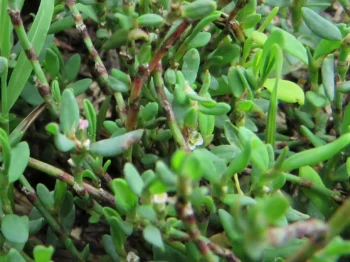
Prostrate Knotweed: The Humble Groundcover You Probably Already Have
If you’ve ever noticed a tough little plant sprawling across your driveway cracks or forming mats along well-worn garden paths, chances are you’ve met prostrate knotweed (Polygonum aviculare). This unassuming annual to perennial herb might not win any beauty contests, but it’s one of nature’s most persistent survivors.
What Is Prostrate Knotweed?
Prostrate knotweed is a low-growing forb – that’s botanist-speak for a non-woody plant – that forms spreading mats close to the ground. You might also encounter it listed under several scientific synonyms, including Polygonum heterophyllum or Polygonum monspeliense, but they’re all referring to the same resilient little plant.
This species produces small, oval-shaped leaves and tiny, inconspicuous greenish-white flowers that most people never notice. It’s not what you’d call a showstopper, but it makes up for its modest appearance with remarkable toughness.
Where Does It Come From and Where Does It Grow?
Originally hailing from Europe, Asia, and North Africa, prostrate knotweed has become a true world traveler. It’s now established across virtually all of North America, from Alaska to Hawaii, and from coast to coast in both the United States and Canada. You’ll find it thriving in all lower 48 states, most Canadian provinces, and even in Greenland.
- Species observed
- No observations
This widespread distribution tells you something important about prostrate knotweed: it’s incredibly adaptable. The plant can handle USDA hardiness zones 3 through 9, making it suitable for climates ranging from subarctic to subtropical.
Should You Plant Prostrate Knotweed in Your Garden?
Here’s where things get interesting. Most gardeners don’t actually plant prostrate knotweed – it just shows up on its own. And honestly, that’s probably for the best. While this plant isn’t considered invasive or harmful, it’s not particularly attractive either.
However, there are a few scenarios where prostrate knotweed might actually be welcome:
- High-traffic areas where other plants won’t survive
- Compacted soil that needs some plant cover
- Areas where you want extremely low-maintenance ground cover
- Disturbed sites that need quick stabilization
Growing Conditions and Habitat
If prostrate knotweed has one superpower, it’s thriving where other plants fear to tread. This tough customer actually prefers compacted, disturbed soils – the kind of conditions that make most gardeners throw up their hands in frustration.
The plant’s wetland status varies by region, but generally, it’s quite drought-tolerant and prefers well-drained to dry conditions. It’s what botanists call facultative to facultative upland in most areas, meaning it usually grows in non-wetland areas but can occasionally tolerate some moisture.
Prostrate knotweed loves full sun and isn’t picky about soil quality. In fact, it seems to thrive in poor soils where competition from other plants is minimal.
Wildlife and Pollinator Value
While prostrate knotweed won’t attract clouds of butterflies, its small flowers do provide some nectar for tiny insects. The seeds can also serve as food for small birds and other wildlife, though it’s not a major wildlife magnet.
Better Native Alternatives
Since prostrate knotweed is non-native, you might want to consider native alternatives that can provide similar ground cover benefits while supporting local ecosystems:
- Wild strawberry (Fragaria species) for shadier areas
- Creeping phlox (Phlox subulata) for colorful spring blooms
- Kinnikinnick (Arctostaphylos uva-ursi) in appropriate climates
- Native sedums for dry, sunny spots
The Bottom Line
Prostrate knotweed is the plant equivalent of that reliable friend who’s always there when you need them – maybe not the most exciting company, but dependable nonetheless. While you probably won’t want to feature it in your prize perennial border, you might just learn to appreciate its tenacious presence in those challenging spots where nothing else will grow.
If you’re dealing with compacted soil, foot traffic, or other difficult conditions, prostrate knotweed might already be solving your problems without any help from you. Sometimes the best gardening strategy is simply recognizing when nature has already provided a perfectly adequate solution.