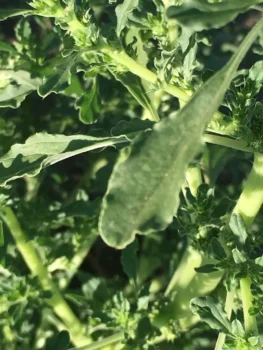
Prostrate Pigweed: The Uninvited Garden Guest You Should Know About
If you’ve ever found a low-growing, spreading plant with small oval leaves popping up uninvited in your garden beds or vegetable patch, you’ve likely met prostrate pigweed (Amaranthus albus). Also known as tumble pigweed or tumbleweed, this annual forb has a knack for appearing wherever the soil has been disturbed – and it’s probably not going anywhere anytime soon.
What Exactly Is Prostrate Pigweed?
Prostrate pigweed is an annual forb, meaning it’s a non-woody plant that completes its entire life cycle in one growing season. True to its prostrate name, this plant grows close to the ground in a sprawling, mat-like form rather than standing tall. Don’t expect showy flowers – this species produces tiny, inconspicuous greenish blooms that you might not even notice.
You might also hear this plant called by several other names, including tumble pigweed and tumbleweed, which hints at its ability to break away and roll around when mature and dry.
Where Does It Come From and Where Can You Find It?
Here’s the thing about prostrate pigweed – it’s not actually native to North America. This introduced species has made itself quite at home across the continent, establishing populations that reproduce and persist without any human help. You can find it growing wild in virtually every U.S. state and Canadian province, from Alaska down to Florida and from coast to coast.
- Species observed
- No observations
The plant has different legal statuses depending on where you are. In some regions like Alaska and parts of Canada, it’s considered a waif – basically a plant that shows up temporarily but doesn’t always stick around permanently in the wild.
What Does It Look Like and How Does It Grow?
Prostrate pigweed lives up to its name by growing low and spreading outward rather than upward. As an annual, it germinates, grows, flowers, sets seed, and dies all within one growing season. The plant typically forms a mat-like growth pattern with stems radiating out from a central point.
The leaves are small and oval-shaped, and the flowers are so tiny and green that they blend right in with the foliage. Don’t expect any garden-worthy blooms here – this plant is all about function over form.
Growing Conditions and Hardiness
One of the reasons prostrate pigweed is so successful is its adaptability. This tough little plant actually prefers poor, disturbed soils – the kind of spots where many other plants struggle. It’s quite drought-tolerant once established and thrives in full sun conditions.
The plant has a Facultative Upland wetland status across all regions, which means it usually grows in non-wetland areas but can occasionally tolerate wetter conditions if needed.
As for hardiness zones, since it’s an annual that grows from seed each year, it can establish in any zone where there’s enough frost-free time for it to complete its life cycle – essentially zones 3 through 11.
Should You Plant Prostrate Pigweed?
Here’s where we need to have an honest conversation. While prostrate pigweed isn’t classified as invasive or noxious, it’s also not something most gardeners intentionally plant. It offers minimal ornamental value and limited benefits to pollinators since it’s wind-pollinated rather than insect-pollinated.
If you’re looking for low-growing ground cover or plants for difficult sites, there are much better native alternatives that will provide more ecological benefits and aesthetic appeal. Consider native options like:
- Wild strawberry (Fragaria virginiana) for ground cover
- Native sedums for dry, poor soils
- Regional native grasses for disturbed areas
- Native wildflowers that support local pollinators
Dealing with Prostrate Pigweed in Your Garden
More likely than planting it, you’ll be dealing with prostrate pigweed that shows up on its own. If you want to manage it in your garden:
- Hand-pull young plants before they set seed
- Mulch garden beds to suppress germination
- Improve soil conditions to favor more desirable plants
- Plant dense native ground covers to outcompete weeds
Remember, this plant can self-seed readily, so removing it before it goes to seed will help prevent future generations from establishing.
The Bottom Line
While prostrate pigweed isn’t a garden villain, it’s not exactly a garden hero either. It’s simply a tough, adaptable plant that’s found its niche in disturbed soils across North America. If you encounter it in your garden, you now know what you’re dealing with – and you know there are much better native alternatives if you’re looking to intentionally plant something in those challenging spots.
Focus your gardening energy on native plants that will provide food for local wildlife, support pollinators, and give you more bang for your gardening buck. Your local ecosystem – and your garden’s aesthetics – will thank you for it.