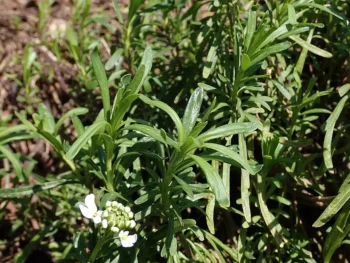
Pruit’s Candytuft: A Little-Known Member of the Candytuft Family
If you’ve stumbled across the name Pruit’s candytuft (Iberis carnosa), you might be wondering what exactly this plant is and whether it deserves a spot in your garden. Well, you’re not alone in your curiosity—this particular member of the candytuft family is quite the mysterious character in the gardening world.
What is Pruit’s Candytuft?
Pruit’s candytuft, scientifically known as Iberis carnosa, is a herbaceous flowering plant that belongs to the mustard family. You might also see it listed under its synonym, Iberis pruitii Tineo. As a forb, it’s essentially a non-woody flowering plant that can be either annual or perennial, depending on growing conditions.
Where Does It Come From?
This candytuft species is not native to North America. It’s an introduced plant that has established itself and now reproduces on its own in the wild. In the United States, it has been documented growing in New York, though its presence may be quite limited.
- Species observed
- No observations
The Mystery Factor
Here’s where things get interesting (and a bit frustrating for curious gardeners): Iberis carnosa is one of those plants that seems to fly under the radar. Unlike its more famous cousins in the Iberis family, detailed information about its appearance, growing habits, and garden performance is surprisingly scarce in mainstream horticultural literature.
Should You Grow It?
Given the limited information available about this species, it’s difficult to make a strong recommendation either way. We don’t know enough about its potential invasiveness, its garden performance, or even its basic growing requirements to give you the complete picture you’d want before adding it to your landscape.
If you’re drawn to the candytuft family for your garden, you might be better served by choosing better-documented species or, even better, exploring native alternatives that can provide similar benefits with more predictable results.
Native Alternatives to Consider
Instead of taking a chance on the mysterious Pruit’s candytuft, consider these native options that offer similar low-growing, flowering characteristics:
- Wild ginger (Asarum canadense) for shaded areas
- Wild strawberry (Fragaria virginiana) for ground cover
- Creeping phlox (Phlox subulata) for sunny slopes
- Pennsylvania sedge (Carex pensylvanica) for texture and wildlife value
The Bottom Line
Pruit’s candytuft remains something of an enigma in the gardening world. While it’s not flagged as invasive or noxious, the lack of readily available information about its growth habits, care requirements, and garden performance makes it a risky choice for most gardeners.
If you’re committed to exploring lesser-known plants, proceed with caution and consider starting with just a small trial area. But for most gardeners, especially those interested in supporting local ecosystems, focusing on well-documented native species will likely give you better results and more predictable outcomes.
Sometimes the most interesting plants are the ones that keep their secrets—but when it comes to your garden, you might prefer plants that are a little more forthcoming about their needs and benefits!