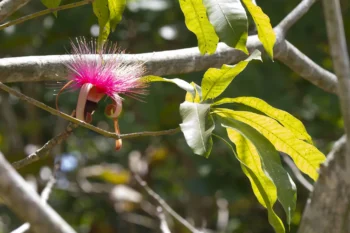
Pseudobombax ellipticum: The Rare Shaving Brush Tree That’s Worth the Wait
Meet Pseudobombax ellipticum, better known as the shaving brush tree – a botanical showstopper that’s as quirky as its common name suggests. This remarkable tree gets its whimsical moniker from its spectacular pink flowers that burst forth like giant powder puffs, complete with prominent stamens that really do look like old-fashioned shaving brushes. But before you rush to add this beauty to your garden, there’s something important you need to know about its conservation status.
A Tree Worth Protecting
The shaving brush tree carries a Global Conservation Status of S3, meaning it’s considered vulnerable in the wild. With only 21 to 100 known occurrences and an estimated 3,000 to 10,000 individuals remaining, this species faces challenges throughout its native range. If you’re considering growing one, make sure you’re purchasing from reputable nurseries that source their plants responsibly – never collect from wild populations.
Where Does It Call Home?
Originally from the tropical dry forests of Mexico and Central America, stretching from southern Mexico down to Guatemala, Pseudobombax ellipticum has evolved to thrive in warm, seasonally dry climates. In its native habitat, it’s a key species in tropical deciduous forests where it has co-evolved with local pollinators over thousands of years.
Why Gardeners Fall Head Over Heels
There’s something absolutely magical about watching a shaving brush tree come into bloom. Here’s what makes it such a garden gem:
- Dramatic seasonal display: The tree drops its leaves and then explodes into a spectacular show of large, pink, brush-like flowers
- Unique trunk character: Develops a distinctive bottle-shaped trunk (called a caudex) that adds architectural interest year-round
- Pollinator magnet: The nectar-rich flowers attract bats, hummingbirds, and various insects
- Drought tolerance: Once established, it’s remarkably resilient during dry periods
- Conversation starter: Few trees generate as many what is that? questions from visitors
Garden Role and Design Ideas
The shaving brush tree works best as a specimen plant where it can steal the spotlight. Its moderate size (typically reaching 15-25 feet tall and wide) makes it perfect for:
- Tropical and subtropical landscape designs
- Xerophytic or drought-tolerant gardens
- Courtyards and patios where its sculptural form can be appreciated up close
- Mixed plantings with other tropical flowering trees
The tree’s deciduous nature means it provides seasonal interest rather than year-round foliage, so consider pairing it with evergreen companions for continuous garden structure.
Growing Conditions That Make It Happy
Success with shaving brush trees comes down to mimicking their natural habitat:
- Sunlight: Full sun is essential for best flowering
- Soil: Well-draining soil is crucial – they hate wet feet
- Water: Regular water during establishment, then drought-tolerant
- Climate: USDA hardiness zones 9b-11 (protect from frost when young)
Planting and Care Tips for Success
Getting your shaving brush tree off to a good start is relatively straightforward:
- Timing: Plant in late spring after the last frost risk has passed
- Location: Choose a spot with excellent drainage and full sun exposure
- Initial care: Water regularly the first year, then gradually reduce frequency
- Pruning: Minimal pruning needed – just remove dead or damaged branches
- Fertilizing: Light feeding with balanced fertilizer during growing season
- Frost protection: Young trees may need protection in borderline climates
The Wildlife Connection
In its native range, the shaving brush tree plays host to an fascinating array of pollinators. The large, nectar-rich flowers are particularly attractive to bats, which are important nighttime pollinators. During the day, hummingbirds and various insects take over pollination duties, making this tree a valuable addition to wildlife-friendly gardens.
Is This Tree Right for Your Garden?
The shaving brush tree isn’t for every gardener or every garden. Consider it if you:
- Live in USDA zones 9b-11
- Have space for a medium-sized specimen tree
- Appreciate dramatic seasonal displays
- Want to support conservation efforts
- Enjoy unique, conversation-worthy plants
However, you might want to look elsewhere if you need year-round foliage, live in a frost-prone area, or prefer low-maintenance plants that don’t require specific growing conditions.
Growing a shaving brush tree is more than just adding another plant to your landscape – it’s participating in the conservation of a vulnerable species while enjoying one of nature’s most spectacular floral displays. Just remember to source responsibly and give this remarkable tree the care it deserves.