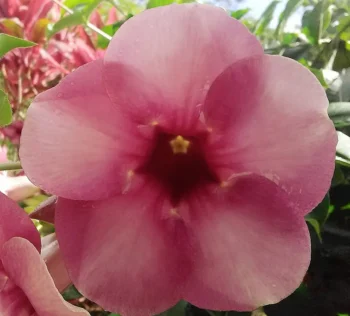
Purple Allamanda: A Tropical Beauty for Warm-Climate Gardens
If you’re looking to add a splash of vibrant color to your tropical garden, purple allamanda (Allamanda blanchetii) might just catch your eye. This eye-catching shrub brings stunning purple blooms to landscapes in the warmest parts of the United States, though it comes with some important considerations for the environmentally conscious gardener.
What is Purple Allamanda?
Purple allamanda is a perennial shrub that typically grows as a multi-stemmed woody plant, usually reaching heights of 13 to 16 feet, though it can sometimes grow taller or develop a single stem depending on growing conditions. As its common name suggests, this plant is prized for its beautiful purple trumpet-shaped flowers that bloom throughout the growing season.
Where Does Purple Allamanda Come From?
Here’s where things get interesting from a native gardening perspective. Purple allamanda is not native to the United States. Originally from South America, this plant has been introduced to Puerto Rico, where it now reproduces spontaneously in the wild without human assistance. This means it has naturalized in this region, establishing self-sustaining populations.
- Species observed
- No observations
Should You Plant Purple Allamanda?
The decision to plant purple allamanda depends on your gardening philosophy and local conditions. While this plant isn’t currently classified as invasive, its ability to reproduce and persist without human help in Puerto Rico suggests it’s quite adaptable. Before planting, consider these factors:
- It’s not native to the continental United States
- It may compete with native plants for resources
- Native alternatives often provide better support for local wildlife
- It requires specific tropical or subtropical conditions to thrive
Native Alternatives to Consider
If you’re committed to native gardening, consider these beautiful native alternatives that offer similar aesthetic appeal:
- Native hibiscus species for showy flowers
- Coral honeysuckle for trumpet-shaped blooms
- Native azaleas for colorful spring displays
Growing Conditions and Care
If you decide to grow purple allamanda, success depends on providing the right tropical conditions:
Climate Requirements: Purple allamanda thrives in USDA hardiness zones 9-11, where temperatures rarely drop below freezing. It needs consistently warm conditions to flourish.
Sun and Soil: This shrub performs best in full sun locations with well-draining soil. Like most tropical plants, it doesn’t tolerate waterlogged conditions.
Watering: Provide regular watering during the growing season, but avoid overwatering. Allow the soil to dry slightly between waterings.
Maintenance: Occasional pruning helps maintain shape and encourages flowering. Remove any dead or damaged branches as needed.
Wildlife and Pollinator Benefits
While specific wildlife benefits for purple allamanda aren’t well-documented, plants in the Allamanda genus typically attract butterflies and may appeal to hummingbirds with their trumpet-shaped flowers. However, native plants almost always provide superior support for local wildlife, including specialized relationships with native pollinators and birds.
The Bottom Line
Purple allamanda can be a stunning addition to tropical and subtropical gardens, offering vibrant purple blooms and evergreen foliage. However, as a non-native species, it’s worth considering whether native alternatives might better serve both your garden goals and local ecosystem health. If you do choose to plant it, ensure you’re in an appropriate climate zone and can provide the warm, sunny conditions it needs to thrive.
Remember, the most sustainable gardens work with nature rather than against it, supporting local wildlife while creating beautiful spaces for human enjoyment.