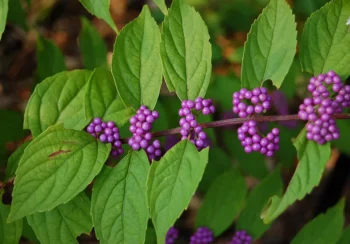
Purple Beautyberry: A Non-Native Shrub with Striking Fall Appeal
If you’re looking for a shrub that puts on a spectacular fall show, purple beautyberry (Callicarpa dichotoma) might catch your eye with its clusters of bright purple berries. This Asian native has found its way into American gardens, bringing both beauty and some considerations worth exploring.
What Is Purple Beautyberry?
Purple beautyberry is a perennial, multi-stemmed woody shrub that typically grows 4-6 feet tall and wide. Originally from eastern Asia, this deciduous plant has established itself in parts of the southeastern United States, where it grows in Delaware, Kentucky, North Carolina, South Carolina, Tennessee, and Virginia.
- Species observed
- No observations
The plant goes by the botanical name Callicarpa dichotoma and has the synonym Callicarpa purpurea. While purple beautyberry is its most common name, you might occasionally see it referred to by its scientific name in nurseries.
Why Gardeners Are Drawn to This Plant
The main attraction of purple beautyberry is undoubtedly its fall display. After producing small, delicate pink to white flowers in summer, the shrub develops clusters of bright purple berries that persist into winter. These berries create an almost magical effect, especially when backlit by autumn sun.
The plant also offers some benefits to pollinators, with its summer flowers attracting bees and butterflies to the garden.
Important Considerations Before Planting
Here’s where things get a bit complicated. Purple beautyberry is not native to North America – it’s an introduced species that has naturalized in several southeastern states. While it’s not considered highly invasive in most areas, it does appear on Alabama’s Watch List, meaning it’s being monitored for potential invasive behavior.
The plant has a particular affinity for wetland areas, with an Obligate Wetland status in both the Atlantic and Gulf Coastal Plain and Eastern Mountains and Piedmont regions. This means it almost always occurs in wetlands and could potentially impact these sensitive ecosystems.
Growing Conditions and Care
If you do choose to grow purple beautyberry, you’ll find it’s relatively easy to care for. The plant thrives in USDA hardiness zones 5-8 and adapts to various conditions:
- Light: Partial shade to full sun
- Soil: Moist, well-draining soil (though it tolerates various soil types)
- Water: Regular moisture, especially important given its wetland preference
- Maintenance: Low maintenance once established
Planting and Care Tips
Purple beautyberry is generally forgiving and easy to establish. Plant in spring after the last frost, giving it space to reach its mature size of 4-6 feet in both height and width. The shrub benefits from:
- Regular watering during its first growing season
- Pruning in late winter to maintain shape and encourage new growth
- Mulching around the base to retain moisture
- Minimal fertilization – it’s not particularly demanding
Native Alternatives to Consider
Given purple beautyberry’s non-native status and potential for naturalization, you might want to consider native alternatives that provide similar benefits:
- American beautyberry (Callicarpa americana) – offers similar purple berries and is native to the southeastern US
- Elderberry (Sambucus canadensis) – provides berries for wildlife and has beautiful flowers
- Spicebush (Lindera benzoin) – offers yellow fall color and berries for birds
- Coral honeysuckle (Lonicera sempervirens) – native vine with tubular flowers that attract hummingbirds
The Bottom Line
Purple beautyberry certainly has ornamental appeal, especially for gardeners who love dramatic fall displays. However, its non-native status and potential for naturalization in wetland areas give us pause. If you’re drawn to this plant’s unique beauty, consider whether one of the native alternatives might serve your garden just as well while supporting local ecosystems.
Whatever you choose, remember that every plant decision is an opportunity to create habitat and support the wildlife that calls your area home. Happy gardening!