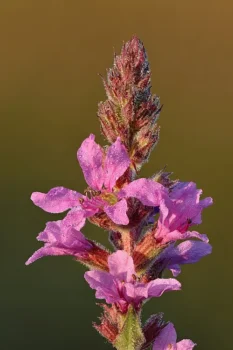
Purple Loosestrife: The Beautiful Invader You Should Never Plant
If you’ve ever driven past a wetland area in summer and noticed stunning spikes of magenta-purple flowers creating a sea of color, you’ve likely spotted purple loosestrife (Lythrum salicaria). While undeniably beautiful, this European import has earned the unfortunate distinction of being one of North America’s most problematic invasive plants. Let’s explore why this pretty perennial should stay out of your garden – and what you can plant instead.
What Is Purple Loosestrife?
Purple loosestrife is a perennial herb that belongs to the loosestrife family. This non-native species was originally brought to North America from Europe, Asia, and northwestern Africa, likely arriving in the 1800s in ship ballast or as an ornamental plant. What seemed like an innocent addition to gardens has since become a wetland nightmare.
The plant grows as a forb – essentially a non-woody flowering plant – and can reach impressive heights of 4-10 feet tall. Its distinctive flower spikes bloom from mid-summer through early fall, creating those eye-catching purple displays that make it both beloved and reviled.
Where Purple Loosestrife Grows
Unfortunately, purple loosestrife has spread far beyond its intended garden boundaries. This aggressive colonizer now grows wild across most of Canada and the United States, from Alberta to Newfoundland and from Alaska down to Alabama. It has established populations in nearly every state and Canadian province, demonstrating just how adaptable and persistent this species can be.
- Species observed
- No observations
Why Purple Loosestrife Is a Problem
Here’s where things get serious. Purple loosestrife isn’t just an enthusiastic spreader – it’s officially classified as invasive or prohibited in numerous states:
- Alabama lists it as Category 2 invasive and Class B noxious weed
- Connecticut, Minnesota, and New Hampshire have prohibited its sale and planting
- Delaware, Michigan, Missouri, North Dakota, and Wisconsin classify it as invasive
- Alaska has banned it entirely as a noxious weed
The plant’s success lies in its incredible reproductive ability. A single mature plant can produce up to 2.7 million seeds annually, and it also spreads through underground root systems. Once established, purple loosestrife forms dense monocultures that crowd out native wetland plants, disrupting entire ecosystems and reducing biodiversity.
Wetland Specialist with a Dark Side
Purple loosestrife is classified as an obligate wetland species across most regions, meaning it almost always occurs in wet conditions. It thrives in marshes, pond edges, ditches, and any consistently moist area. This specialization might seem limiting, but wetlands are some of our most important and threatened ecosystems – making the plant’s impact even more devastating.
The Pollinator Paradox
One of purple loosestrife’s most insidious qualities is that it does attract pollinators. Bees, butterflies, and other insects visit its flowers, which can make gardeners think they’re helping wildlife. However, this plant provides little nutritional value compared to native alternatives, and its dominance actually reduces the diversity of plants that specialized native insects depend on for survival.
Growing Conditions (That You Shouldn’t Provide)
For educational purposes only, here’s what purple loosestrife prefers – so you can avoid creating these conditions or remove existing plants:
- Consistently moist to wet soil
- Full sun to partial shade
- Various soil types, from sandy to clay
- USDA hardiness zones 3-9
- pH levels from slightly acidic to neutral
Better Alternatives for Your Garden
Instead of purple loosestrife, consider these beautiful native alternatives that provide similar visual impact without ecological harm:
- Blue vervain (Verbena hastata) – Tall purple flower spikes that pollinators adore
- New England aster (Symphyotrichum novae-angliae) – Stunning fall purple blooms
- Wild bergamot (Monarda fistulosa) – Lavender flowers beloved by bees and butterflies
- Joe Pye weed (Eutrochium purpureum) – Majestic purple flower heads perfect for wet areas
- Ironweed (Vernonia species) – Deep purple flowers on tall, sturdy stems
What to Do If You Have Purple Loosestrife
If you discover purple loosestrife on your property, act quickly:
- Small populations can be hand-pulled when soil is moist
- Remove the entire root system to prevent regrowth
- Cut flower heads before they go to seed
- Bag and dispose of plant material in municipal garbage – never compost
- Monitor the area for several years, as seeds can remain viable in soil
- Contact your local extension office for guidance on larger infestations
The Bottom Line
Purple loosestrife serves as a perfect example of why good intentions in gardening can have unintended consequences. While its flowers are undeniably beautiful, this plant represents a significant threat to North American wetland ecosystems. By choosing native alternatives, you can create equally stunning displays while supporting local wildlife and protecting natural areas.
Remember: the best gardens work with nature, not against it. When we choose plants that belong in our local ecosystems, we create landscapes that are not only beautiful but also sustainable and beneficial for generations to come.