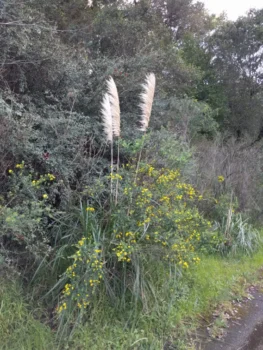
Purple Pampas Grass: The Dramatic Non-Native Ornamental That Divides Gardeners
If you’ve ever driven along California’s coastline and spotted towering grass plumes swaying majestically in the ocean breeze, you’ve likely encountered purple pampas grass (Cortaderia jubata). This South American native has made quite a name for itself in American gardens, though not without some controversy.
What Exactly Is Purple Pampas Grass?
Purple pampas grass is a large perennial grass that belongs to the same family as your lawn grass, but don’t expect to mow this one! This dramatic plant can reach impressive heights and produces those signature fluffy, pinkish-purple plumes that make it instantly recognizable. Unlike many garden plants, it’s what botanists call a graminoid – essentially a fancy way of saying it’s part of the grass and grass-like plant family.
Where Does It Call Home?
Originally from the Andes mountains of South America, purple pampas grass has traveled far from its native home. In the United States, you’ll find it growing in California, Hawaii, Oregon, and Washington. It’s what plant experts call naturalized, meaning it’s settled in so well that it reproduces on its own without any help from gardeners.
- Species observed
- No observations
The Appeal: Why Gardeners Fall for Purple Pampas Grass
Let’s be honest – purple pampas grass knows how to make an entrance. Here’s what draws people to this towering beauty:
- Dramatic height and presence that creates instant impact
- Gorgeous pinkish-purple plumes that catch the light beautifully
- Excellent for creating natural screens or windbreaks
- Thrives in coastal conditions where other plants struggle
- Low maintenance once established
- Adds movement and texture to landscapes
Growing Purple Pampas Grass: The Practical Details
If you’re considering adding purple pampas grass to your landscape, here’s what you need to know about keeping it happy:
Ideal Growing Conditions
- Sunlight: Full sun is best – this grass loves to bask
- Soil: Well-draining soil is essential; it’s not picky about soil type
- Water: Drought tolerant once established, but appreciates occasional deep watering
- Climate: Thrives in USDA hardiness zones 8-11
Planting and Care Tips
- Give it plenty of space – this grass doesn’t like to be crowded
- Plant in spring for best establishment
- Water regularly the first year, then back off as it establishes
- Prune back in late winter or early spring before new growth
- Be prepared for vigorous growth and self-seeding
The Wetland Lowdown
Purple pampas grass is generally an upland plant, meaning it prefers drier conditions over soggy soils. Depending on your region, it usually avoids wetlands, though in some areas it might occasionally pop up in wetter spots. This makes it perfect for those challenging dry areas of your garden where other plants might struggle.
A Word of Caution: The Non-Native Reality
Here’s where things get a bit complicated. Purple pampas grass isn’t native to North America, and while it’s undeniably beautiful, some regions have concerns about its tendency to spread beyond gardens. As a responsible gardener, it’s worth considering native alternatives that provide similar visual impact without potential ecological concerns.
Native Alternatives Worth Considering
If you love the look of large ornamental grasses but want to support local ecosystems, consider these native options:
- Big bluestem (Andropogon gerardii) for prairie-style gardens
- Giant wild rye (Leymus condensatus) for California gardens
- Prairie dropseed (Sporobolus heterolepis) for smaller spaces
- Switch grass (Panicum virgatum) for versatile beauty
The Bottom Line
Purple pampas grass is undeniably striking and can create stunning focal points in Mediterranean-style gardens, coastal landscapes, and anywhere you want dramatic height and texture. It’s relatively easy to grow and maintain, making it appealing to busy gardeners. However, as with any non-native plant, consider your local ecosystem and perhaps explore native grass alternatives first. If you do choose to grow purple pampas grass, be mindful of its self-seeding tendencies and consider removing flower heads before they set seed if naturalization is a concern in your area.
Whatever you decide, remember that the best garden is one that reflects both your personal style and environmental responsibility – and there’s room for thoughtful choices in both directions.