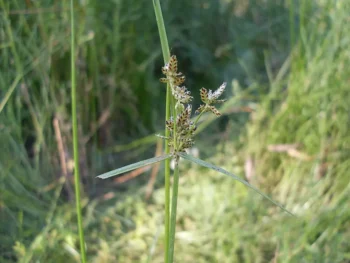
Purpleglume Flatsedge: A Wetland Sedge for Specialized Gardens
If you’re looking for a grass-like plant to fill wet spots in your landscape, you might have come across purpleglume flatsedge (Cyperus sanguinolentus). This small sedge has found its way into several southeastern states and Hawaii, though it’s not native to North America. Let’s explore what this plant brings to the table and whether it deserves a spot in your garden.
What is Purpleglume Flatsedge?
Purpleglume flatsedge is a sedge—part of the Cyperaceae family—that can behave as either an annual or perennial depending on growing conditions. As its common name suggests, this plant produces small flower clusters with purplish-tinged bracts that give it its distinctive appearance. Don’t let the flatsedge name fool you; like other sedges, it has triangular stems rather than the round stems you’d find on true grasses.
You might also see this plant listed under several botanical synonyms, including Cyperus louisianensis and Pycreus sanguinolentus, which can make identification a bit tricky when browsing plant databases or older gardening resources.
Where Does It Grow?
Currently, purpleglume flatsedge has established populations in Alabama, Georgia, Hawaii, Louisiana, and Mississippi. It’s considered non-native throughout this range, having been introduced from its original habitat and now reproducing on its own in the wild.
- Species observed
- No observations
Should You Plant Purpleglume Flatsedge?
Here’s where things get a bit complicated. While this sedge isn’t currently listed as invasive or noxious, its non-native status means it’s worth proceeding with caution. The plant has a somewhat uncertain conservation status (ranked as S3S4Q globally), which adds another layer of consideration for responsible gardeners.
If you’re drawn to this plant’s characteristics, consider these factors:
- It fills a niche for wet, difficult-to-plant areas
- Low maintenance once established
- Provides textural interest with its grass-like form
- Adapts to various moisture levels
However, before planting purpleglume flatsedge, consider exploring native sedge alternatives that provide similar benefits while supporting local ecosystems. Native sedges like Cyperus esculentus (yellow nutsedge) or other regional Cyperus species might offer comparable garden value.
Growing Conditions and Care
If you decide to grow purpleglume flatsedge, it’s relatively accommodating. This sedge thrives in moist to wet soils and tolerates both full sun and partial shade conditions. It’s best suited for USDA hardiness zones 8-11, based on its current distribution.
Ideal growing spots include:
- Rain garden edges
- Bog or water gardens
- Pond margins
- Areas with seasonal flooding
The plant spreads through both seeds and underground rhizomes, so keep this in mind when planning your garden layout. Regular monitoring will help ensure it doesn’t spread beyond your intended planting area.
Garden Design Role
Purpleglume flatsedge works best as a supporting player rather than a showstopper. Its modest size and subtle purple-tinged flowers make it ideal for naturalizing wet areas or adding fine texture to mixed plantings. It pairs well with other moisture-loving plants and can help create a cohesive, meadow-like appearance in appropriate settings.
Wildlife and Pollinator Value
Like most sedges, purpleglume flatsedge is wind-pollinated, so it doesn’t offer significant nectar resources for pollinators. However, sedges can provide some wildlife value through seed production for birds and habitat for small creatures, though specific benefits for this species aren’t well-documented.
The Bottom Line
Purpleglume flatsedge can be a functional addition to specialized garden situations, particularly wet areas that challenge other plants. However, its non-native status means responsible gardeners should carefully consider native alternatives first. If you do choose to plant it, source it responsibly and monitor its spread to ensure it remains where you want it. Remember, the best garden plants are often those that naturally belong in your local ecosystem!