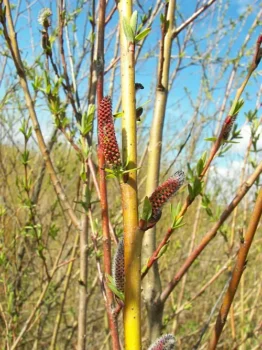
Purpleosier Willow: A European Beauty for Wet Spots in Your Garden
If you’ve been scratching your head over what to plant in those soggy corners of your yard, let me introduce you to purpleosier willow. This elegant shrub might just be the solution to your wet-soil woes, though as with any non-native plant, it’s worth understanding what you’re getting into before you dig that first hole.
What Exactly Is Purpleosier Willow?
Purpleosier willow (Salix purpurea) goes by several names – you might see it called basket willow, purple osier, or simply purple willow. This perennial shrub typically grows 6-10 feet tall and wide, creating a rounded, dense form that’s both practical and pleasing to the eye.
What really sets this willow apart are its stunning purple-red stems that practically glow in winter sunlight. The narrow, blue-green leaves create a soft texture during the growing season, but it’s those colorful branches that steal the show when everything else has gone dormant.
Where Does It Come From and Where Does It Grow?
Originally from Europe and parts of Asia, purpleosier willow has made itself quite at home across North America. You’ll find it thriving from the Maritime provinces of Canada down through much of the eastern and central United States, with scattered populations reaching as far west as Colorado and Washington.
It’s established itself in states from Maine to Georgia, and from the Atlantic coast all the way to the Great Plains. This wide distribution tells us something important – this plant is quite adaptable!
- Species observed
- No observations
The Wet Feet Factor
Here’s where things get interesting from a gardening perspective. Purpleosier willow is what we call a facultative wetland plant in most regions – meaning it loves wet feet but can tolerate drier conditions too. In some areas like the Great Plains and Western Mountains, it’s considered an obligate wetland plant, which means it really, truly needs that moisture.
This wetland preference makes it a fantastic choice for:
- Rain gardens and bioswales
- Pond edges and stream banks
- Areas with seasonal flooding
- Low-lying spots where other plants struggle
Why Gardeners Love (and Sometimes Question) This Willow
The appeal is pretty obvious – purpleosier willow offers year-round interest with minimal fuss. Those purple stems create incredible winter drama, especially when planted where they’ll catch morning or late afternoon light. The shrub grows relatively quickly, making it great for screening or creating windbreaks.
It’s also a pollinator-friendly plant. The early spring catkins provide much-needed nectar and pollen when few other plants are blooming. This timing makes it valuable for supporting native bees and other pollinators emerging from winter.
However, since this is a non-native species, some gardeners prefer to stick with native alternatives. While purpleosier willow isn’t considered invasive, choosing native willows can better support local ecosystems and wildlife that have evolved alongside them.
Growing Purpleosier Willow Successfully
If you decide this willow fits your garden vision, you’ll be happy to know it’s fairly foolproof. Here’s what it needs to thrive:
Climate: Hardy in USDA zones 3-7, this shrub can handle some serious cold but prefers moderate summers.
Soil and Water: Consistent moisture is key. While it can tolerate brief dry spells once established, it performs best in moist to wet soils. Don’t worry about soil quality – this adaptable shrub handles clay, sand, and even poor soils with ease.
Light: Full sun brings out the best stem color, but it’ll tolerate partial shade reasonably well.
Planting: Spring is the ideal time to plant. Dig a hole twice as wide as the root ball but no deeper. Water thoroughly and keep consistently moist through the first growing season.
Care and Maintenance: Annual pruning in late winter or early spring keeps the plant tidy and encourages the colorful new growth that makes this willow special. Cut back about one-third of the oldest stems to maintain vigor.
Native Alternatives Worth Considering
If you’re leaning toward supporting native species, consider these beautiful alternatives:
- American willow (Salix americana) for similar wetland tolerance
- Pussy willow (Salix discolor) for early spring interest
- Sandbar willow (Salix interior) for erosion control
- Native dogwoods for winter stem color in wet areas
The Bottom Line
Purpleosier willow occupies an interesting middle ground in the native gardening world. It’s not invasive, it provides real benefits to pollinators, and it solves genuine garden challenges. While native alternatives might better support local ecosystems, this European transplant has proven it can coexist peacefully in North American landscapes.
Whether you choose purpleosier willow or a native alternative, the important thing is creating habitat and beauty in those challenging wet spots. Your garden (and the wildlife that visits it) will thank you for tackling those soggy areas instead of just complaining about them!