Queen Anne’s Lace: The Delicate Beauty That Divides Gardeners
With its intricate white flowers that look like nature’s own doilies, Queen Anne’s lace (Daucus carota var. carota) is one of those plants that either makes gardeners swoon or makes them reach for the weeding tools. This biennial wildflower has been charming its way across North American landscapes for centuries, and whether you love it or consider it a garden crasher, there’s no denying its ethereal beauty.
What Exactly Is Queen Anne’s Lace?
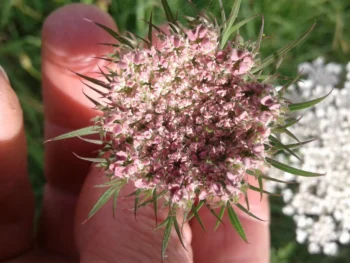
Queen Anne’s lace is a biennial forb, meaning it completes its life cycle over two years and lacks woody stems. In its first year, it forms a rosette of feathery, carrot-like leaves close to the ground. The second year brings the show-stopping flowers – flat-topped clusters of tiny white blooms that create an intricate, lacy pattern that inspired its romantic common name.
Originally from Europe, Southwest Asia, and North Africa, this non-native plant has made itself quite at home across Canada and the lower 48 states. It reproduces readily in the wild and has become a persistent part of many North American landscapes.
The Beauty and the Beast Debate
Queen Anne’s lace sits in that interesting category of plants that gardeners either adore or avoid. Here’s why it might work for your garden – or why you might want to think twice:
Why Gardeners Love It
- Pollinator magnet: The flat flower clusters are like landing pads for beneficial insects, bees, and butterflies
- Low maintenance: Once established, it’s remarkably drought tolerant and requires minimal care
- Cottage garden charm: Perfect for informal, naturalized garden styles
- Long blooming season: Flowers from late spring through fall
- Cut flower potential: Those lacy blooms make lovely additions to bouquets
Why Some Gardeners Hesitate
- Enthusiastic self-seeder: It can pop up where you least expect it
- Non-native status: Some prefer to stick with indigenous plants
- Can be short-lived in formal settings: Better suited for wild or cottage-style gardens
Growing Queen Anne’s Lace Successfully
If you decide to welcome Queen Anne’s lace into your garden, you’ll find it’s refreshingly easy to please:
Ideal Growing Conditions
- Sunlight: Full sun to partial shade (though it flowers best in full sun)
- Soil: Well-drained soil of almost any type – it’s not picky!
- Hardiness: Thrives in USDA zones 3-9
- Spacing: Allow 6-12 inches between plants
Planting and Care Tips
- Start from seed: Direct sow in fall or early spring
- Minimal fertilizer: Too much nutrition can actually reduce flowering
- Water sparingly: Once established, it’s quite drought tolerant
- Deadhead if desired: Remove spent flowers to prevent excessive self-seeding
- Let some go to seed: If you want more plants, allow a few flowers to develop seeds
Perfect Garden Settings
Queen Anne’s lace shines in informal garden settings where its natural, slightly wild appearance can be appreciated. Consider it for:
- Wildflower meadows
- Cottage gardens
- Prairie-style plantings
- Naturalized areas
- Cutting gardens
Native Alternatives to Consider
If you love the look of Queen Anne’s lace but prefer native plants, consider these beautiful alternatives that offer similar aesthetic appeal:
- Wild bergamot (Monarda fistulosa): Native wildflower with clustered blooms
- Yarrow (Achillea millefolium): Flat-topped flower clusters in various colors
- Boneset (Eupatorium perfoliatum): White, fuzzy flower clusters
- White wild indigo (Amorpha canescens): Native prairie plant with delicate white flowers
The Bottom Line
Queen Anne’s lace offers undeniable beauty and is a valuable pollinator plant, but it’s worth considering your garden goals and local ecosystem. If you appreciate its delicate charm and don’t mind a plant that knows how to spread itself around, it can be a lovely addition to informal garden spaces. However, if you’re focused on supporting native ecosystems or prefer more controlled garden settings, the native alternatives might better suit your needs.
Whatever you choose, remember that every garden is a personal expression, and the best plants are the ones that bring you joy while supporting the local environment in positive ways.