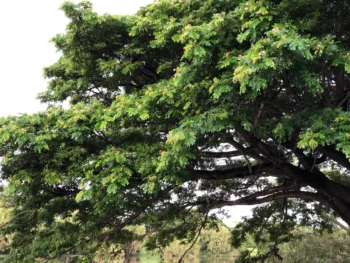
The Magnificent Raintree: A Tropical Giant for Large Landscapes
If you’ve ever dreamed of having a massive, umbrella-shaped tree that could shelter a small village, the raintree (Samanea saman) might just capture your imagination. This impressive tropical giant is known for its spectacular spreading canopy and unique nighttime behavior that gives it its common name.
What Makes the Raintree Special
The raintree is a sight to behold with its enormous, umbrella-like canopy that can spread wider than the tree is tall. Its delicate, feathery compound leaves create a lacy canopy that provides excellent shade during the day. But here’s where it gets interesting – these leaves actually fold up at night and during rainy weather, earning the tree its raintree moniker. The tree produces clusters of fluffy pink and white flowers that look like tiny powder puffs, adding a delicate beauty to this gentle giant.
Native Status and Where It Grows
Originally from Central and South America (ranging from Mexico down to Brazil), the raintree is not native to the United States. However, it has established itself in several U.S. territories and states, including Florida, Hawaii, Guam, Palau, Puerto Rico, and the Virgin Islands, where it reproduces naturally without human intervention.
- Species observed
- No observations
Should You Plant a Raintree?
Before you get swept away by visions of your own majestic raintree, there are several important considerations:
- Space requirements: These trees can reach 50-80 feet tall with an even wider spread – sometimes over 100 feet!
- Climate needs: Only suitable for USDA hardiness zones 10-12
- Non-native status: While beautiful, consider native alternatives that support local ecosystems
- Maintenance: Large trees require professional care and potential liability considerations
Growing Conditions and Care
If you have the space and climate for a raintree, here’s what it needs to thrive:
- Sunlight: Full sun exposure
- Soil: Well-draining soil; tolerates various soil types including sandy and clay soils
- Water: Regular watering when young, drought-tolerant once established
- Wetland tolerance: Prefers upland areas; usually doesn’t occur in wetlands
Planting and Care Tips
Successfully growing a raintree requires patience and planning:
- Plant in an area with plenty of room for expansion – remember that 100-foot spread!
- Water regularly during the first few years to establish a strong root system
- Minimal pruning needed, but when necessary, hire certified arborists
- Be prepared for a slow start – young trees may take several years to show significant growth
Benefits for Wildlife and Pollinators
The raintree’s fluffy flowers are magnets for pollinators, attracting bees, butterflies, and hummingbirds. The large canopy also provides nesting sites and shelter for various bird species, making it a hub of wildlife activity in suitable climates.
Consider Native Alternatives
While the raintree is undeniably beautiful, consider these native alternatives that provide similar benefits while supporting local ecosystems:
- Live Oak (Quercus virginiana) for large shade trees in the Southeast
- Southern Magnolia (Magnolia grandiflora) for evergreen canopy
- Bald Cypress (Taxodium distichum) for unique character and wildlife value
The Bottom Line
The raintree is truly a magnificent specimen that can create a stunning focal point in large tropical and subtropical landscapes. However, its massive size requirements and non-native status make it suitable only for specific situations. If you have the space, climate, and commitment to care for this gentle giant, it can be a rewarding addition to your landscape. Just remember to consider native alternatives that might provide similar aesthetic appeal while better supporting your local ecosystem.