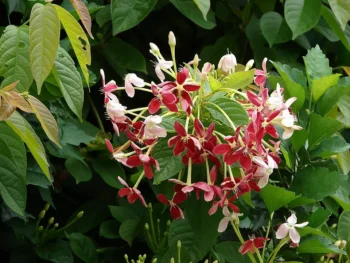
Rangoon Creeper: A Fragrant Climbing Beauty for Warm Gardens
If you’re looking for a show-stopping climbing vine that puts on a color-changing floral display, the Rangoon creeper might just climb its way into your heart. This vigorous perennial vine, scientifically known as Quisqualis indica, offers gardeners in warm climates a spectacular flowering climber that’s hard to ignore.
What Makes Rangoon Creeper Special
The Rangoon creeper earns its place in gardens through sheer floral drama. This twining climber produces clusters of tubular flowers that perform a magical color transformation – starting pure white, gradually shifting to pink, and finally maturing to deep red. The result? A single plant that looks like it’s hosting a three-color flower party, with blooms at different stages creating a stunning multicolored display.
Adding to its appeal, these flowers release an intoxicating fragrance that’s most pronounced in the evening, making your garden a delightfully aromatic retreat as the sun sets.
Know Before You Grow: Native Status and Distribution
Originally from tropical Asia, including Myanmar and the Philippines, Rangoon creeper is a non-native species in the United States. It has established itself and reproduces naturally in Florida, Puerto Rico, and the U.S. Virgin Islands. While it’s not currently listed as invasive, it’s worth keeping an eye on its growth habits in your specific area.
- Species observed
- No observations
Garden Role and Landscape Uses
This vigorous climber shines when given a job to do in the landscape. Here’s where Rangoon creeper works best:
- Covering arbors, pergolas, and gazebos
- Screening unsightly fences or structures
- Adding vertical interest to cottage gardens
- Creating living privacy screens
- Decorating large trellises or garden walls
With its relatively long, woody or herbaceous stems, this plant needs sturdy support – it’s not a dainty climber and will put some weight on whatever structure you provide.
Growing Conditions and Care
Rangoon creeper thrives in USDA hardiness zones 9b through 11, making it suitable only for gardeners in the warmest parts of the country. This frost-sensitive beauty needs:
- Light: Full sun to partial shade (more sun typically means more flowers)
- Soil: Well-draining soil that doesn’t stay soggy
- Water: Regular watering, but allow soil to dry slightly between waterings
- Space: Plenty of room to climb and spread
According to its wetland status, this plant typically grows in non-wetland areas but can occasionally tolerate some moisture, particularly in coastal regions.
Planting and Care Tips
Getting your Rangoon creeper off to a good start involves a few key considerations:
- Install a sturdy support system before planting – this vine means business
- Plant in spring after the last frost danger has passed
- Provide regular water during establishment, then reduce to moderate levels
- Prune regularly to control size and encourage flowering
- Apply balanced fertilizer during the growing season
- Protect from frost in marginal zones
Wildlife and Pollinator Benefits
The fragrant, nectar-rich flowers of Rangoon creeper attract several beneficial visitors to your garden, including butterflies, moths, and hummingbirds. The evening fragrance particularly appeals to night-flying pollinators, making your garden a 24-hour wildlife destination.
Should You Plant Rangoon Creeper?
If you garden in zones 9b-11 and want a dramatic flowering vine with amazing fragrance, Rangoon creeper could be a wonderful addition. However, since it’s non-native, consider these factors:
Choose Rangoon creeper if: You want a reliable, fast-growing climber with spectacular flowers and don’t mind managing a vigorous grower.
Consider native alternatives if: You prefer supporting local ecosystems. Look into native climbing plants like coral honeysuckle (Lonicera sempervirens) or crossvine (Bignonia capreolata) depending on your specific region.
Whatever you choose, remember that the best garden is one that brings you joy while being mindful of the local environment. Happy gardening!