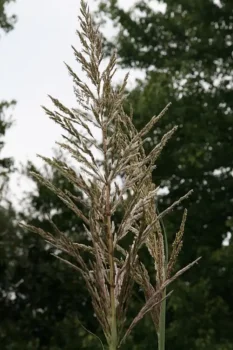
Ravennagrass: A Towering Ornamental Grass for Bold Landscapes
Looking to add some serious drama to your garden? Meet ravennagrass (Saccharum ravennae), a statuesque perennial grass that knows how to make an entrance. This Mediterranean native has been turning heads in American gardens for decades with its impressive height and graceful, feathery plumes.
What is Ravennagrass?
Ravennagrass is a non-native perennial grass that has established itself across much of the United States. Originally from the Mediterranean region, this robust graminoid can reach an impressive 7 feet tall, creating vertical interest that’s hard to ignore. You might also see it listed under its former scientific names, including Erianthus ravennae.
Where Does Ravennagrass Grow?
This adaptable grass has spread to 18 states across the country, from coast to coast. You’ll find it thriving in Arizona, California, Colorado, Delaware, District of Columbia, Florida, Georgia, Illinois, Kansas, Maryland, Michigan, Missouri, New Mexico, New York, Ohio, Oklahoma, Tennessee, and Utah. Its ability to establish in such diverse climates speaks to its remarkable adaptability.
- Species observed
- No observations
The Good, The Bad, and The Tall
Why You Might Love It:
- Rapid growth rate means quick impact in new landscapes
- Drought tolerant once established (medium moisture needs)
- Impressive 7-foot height creates dramatic focal points
- Low maintenance once planted
- Adapts to various soil types
- Hardy in USDA zones 6-10
Why You Might Think Twice:
- Not native to North America
- Can spread and naturalize in some areas
- Limited wildlife benefits compared to native grasses
- Short lifespan means replanting may be needed
- Takes up significant space (not for small gardens)
Growing Ravennagrass Successfully
If you decide ravennagrass fits your landscape vision, here’s how to grow it like a pro:
Site Selection:
Choose a sunny spot with well-draining soil. This grass is shade intolerant, so full sun is non-negotiable. It adapts to coarse, medium, and fine-textured soils, making site selection relatively flexible.
Soil Requirements:
Ravennagrass tolerates a pH range from 4.8 to 7.0, so most garden soils will work. It has medium fertility requirements and doesn’t need rich, amended soil to thrive.
Planting:
Plant in spring after the last frost. You can start with container plants, bare root specimens, or sprigs. Space plants appropriately – remember, these beauties get big! Plan for 1,200-1,800 plants per acre if you’re planning a large installation.
Watering:
While drought tolerant once established, young plants need regular watering their first season. Mature plants have medium moisture needs and can handle dry spells well.
Climate Considerations:
This grass needs at least 185 frost-free days and can handle temperatures as low as -8°F, making it suitable for USDA hardiness zones 6-10.
Landscape Design Ideas
Ravennagrass shines as a specimen plant or backdrop in contemporary and Mediterranean-style gardens. Its erect, bunching growth form makes it perfect for:
- Creating privacy screens (though it’s deciduous)
- Adding height to perennial borders
- Naturalizing in larger landscapes
- Xeriscaping and drought-tolerant gardens
- Modern, architectural garden designs
Maintenance and Care
One of ravennagrass’s best features is its low maintenance requirements. Cut back the previous year’s growth in late winter or early spring before new growth emerges. The plant has slow regrowth after cutting, so timing matters. It’s not fire-resistant, so keep this in mind if you live in fire-prone areas.
Wildlife and Pollinator Value
Ravennagrass offers limited benefits to pollinators since it’s primarily wind-pollinated with inconspicuous yellow flowers that bloom in early summer. The seeds may provide some food for birds, though this isn’t well-documented.
Native Alternatives to Consider
Since ravennagrass isn’t native to North America, you might consider these native alternatives that offer similar dramatic height and texture:
- Big bluestem (Andropogon gerardii) – 4-8 feet tall, beautiful fall color
- Indian grass (Sorghastrum nutans) – 4-7 feet tall, excellent wildlife value
- Switchgrass (Panicum virgatum) – 3-6 feet tall, fantastic for birds
- Giant wild rye (Elymus condensatus) – 6-12 feet tall, western native
The Bottom Line
Ravennagrass can be a stunning addition to the right garden – one with space to accommodate its impressive size and a design that calls for bold, architectural plants. While it’s not native and doesn’t offer the ecological benefits of indigenous grasses, it’s also not currently listed as invasive in most areas. If you choose to plant it, consider balancing it with native species to support local ecosystems, and be mindful of its potential to self-seed in your area.
Whether you choose ravennagrass or opt for a native alternative, the key is selecting plants that fit both your design vision and your local environment. Happy gardening!