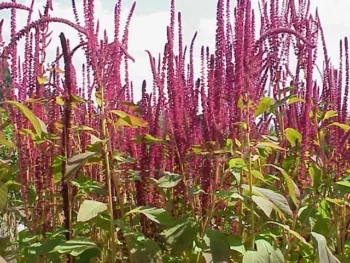
Red Amaranth: A Colorful Annual with Ancient Roots
If you’re looking for a dramatic annual that brings both height and vibrant color to your garden, red amaranth (Amaranthus cruentus) might just be the showstopper you’ve been searching for. This eye-catching plant produces towering spikes of deep red to purple flowers that can transform any garden bed into a stunning focal point.
What Exactly Is Red Amaranth?
Red amaranth is an annual forb – that’s garden-speak for a non-woody plant that completes its life cycle in one growing season. Despite its common name suggesting it’s native to North America, this colorful character actually hails from Central and South America. Today, you’ll find it growing (and sometimes self-seeding) across much of North America, from Canada down to Puerto Rico.
This adaptable plant goes by several scientific names, including some that might make your tongue twist: Amaranthus hybridus var. cruentus and Amaranthus paniculatus. But don’t worry – red amaranth rolls off the tongue much easier!
Where You’ll Find Red Amaranth Growing
Red amaranth has made itself quite at home across North America. You can spot it growing in states from Alabama to Wisconsin, and from coast to coast – including Alabama, Arizona, California, Connecticut, Delaware, Hawaii, Illinois, Indiana, Kentucky, Maine, Maryland, Massachusetts, Michigan, Missouri, Nebraska, New Hampshire, New Jersey, New Mexico, New York, North Carolina, Ohio, Oregon, Pennsylvania, Rhode Island, South Carolina, Texas, Utah, Vermont, Virginia, Washington, and West Virginia. It’s also established itself in several Canadian provinces and Puerto Rico.
- Species observed
- No observations
Should You Grow Red Amaranth?
Here’s where things get interesting. Red amaranth isn’t native to North America, but it’s also not considered invasive or particularly problematic. If you’re drawn to its dramatic appearance, there are both pros and cons to consider:
Reasons you might love red amaranth:
- Striking visual impact with its tall, upright growth and vibrant red flower spikes
- Excellent cut flower that adds drama to bouquets
- Relatively easy to grow and drought-tolerant once established
- Fast-growing annual that provides quick results
- Edible leaves and seeds (it’s actually cultivated as a food crop in many parts of the world)
Things to keep in mind:
- Can self-seed readily, potentially showing up where you didn’t plant it
- Not native, so it doesn’t provide the same ecological benefits as indigenous plants
- May need staking in windy locations due to its height
Growing Red Amaranth Successfully
If you decide to give red amaranth a try, you’ll find it’s refreshingly uncomplicated to grow. This plant thrives in full sun and isn’t particularly fussy about soil, though it performs best in well-drained conditions.
Planting tips:
- Wait until all danger of frost has passed before direct seeding
- Sow seeds directly in the garden – they don’t always transplant well
- Plant seeds about ¼ inch deep and keep soil moist until germination
- Thin seedlings to give plants adequate space to develop
Care requirements:
- Water regularly until plants are established, then reduce frequency
- These plants are surprisingly drought-tolerant once mature
- Consider staking taller varieties if your garden is windy
- Deadhead flowers if you want to prevent self-seeding
Design Ideas and Garden Placement
Red amaranth works beautifully as a backdrop plant in annual flower borders, where its height and bold color can frame shorter plants in front. It’s also fantastic in cutting gardens, cottage-style plantings, and even vegetable gardens where you can harvest the edible leaves.
The plant typically grows quite tall, so place it accordingly in your design. Its upright, columnar growth habit makes it perfect for adding vertical interest without taking up much horizontal space.
Consider Native Alternatives
While red amaranth can certainly earn its place in your garden, you might also want to explore native alternatives that provide similar visual impact while supporting local ecosystems. Consider native amaranth species like Amaranthus albus (white pigweed) if it’s indigenous to your area, or look into native alternatives like cardinal flower (Lobelia cardinalis) for dramatic red color, or native grasses for vertical structure.
The Bottom Line
Red amaranth is a garden-friendly annual that brings undeniable drama and color to any planting. While it’s not native to North America, it’s also not problematic enough to avoid entirely. If you’re drawn to its bold appearance and don’t mind doing a bit of deadheading to prevent excessive self-seeding, it can be a wonderful addition to your garden palette. Just remember to balance non-native choices with plenty of indigenous plants to keep your local ecosystem happy and healthy.