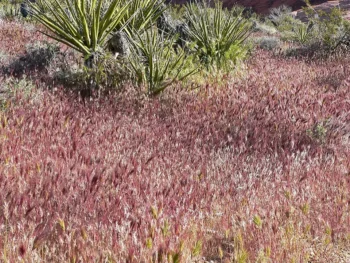
Red Brome: Understanding This Widespread Annual Grass
Red brome (Bromus rubens) is one of those plants that many gardeners encounter without necessarily inviting it into their landscapes. This annual grass has made itself quite at home across much of the United States, despite being a non-native species that originally hailed from the Mediterranean region.
What Is Red Brome?
Red brome is an annual grass that completes its entire life cycle in just one growing season. Don’t let the name fool you – while it’s called red brome, you’re more likely to notice its green foliage and yellowish flowers than any particularly red coloration. This fast-growing bunch grass can reach up to 1.3 feet tall and has a somewhat sprawling, decumbent growth habit.
Native Status and Geographic Distribution
Here’s where things get interesting from a native gardening perspective: red brome is not native to North America. This Mediterranean native has established itself as a naturalized species that reproduces spontaneously in the wild across 16 states, including Arizona, California, Hawaii, Idaho, Maryland, Massachusetts, Montana, Nevada, New Mexico, New York, Oregon, South Carolina, Texas, Utah, Virginia, and Washington.
- Species observed
- No observations
Growing Characteristics
Red brome is nothing if not adaptable. This hardy annual has several notable characteristics:
- Growth rate: Rapid – this grass doesn’t waste time
- Active growing season: Fall, winter, and spring
- Height: Up to 1.3 feet
- Flower color: Yellow, though not particularly showy
- Seed production: Abundant – approximately 200,000 seeds per pound
- Drought tolerance: High
Growing Conditions
If you’re curious about red brome’s growing preferences (perhaps because it’s already appeared in your garden), here’s what it likes:
- Soil: Adapts to coarse, medium, and fine-textured soils
- pH range: 6.0 to 8.2
- Precipitation needs: 5 to 16 inches annually
- Temperature tolerance: Minimum of 22°F
- Sun exposure: Full sun (shade intolerant)
- USDA Hardiness Zones: 8-10
Should You Plant Red Brome?
This is where we need to have an honest conversation. While red brome isn’t necessarily labeled as invasive everywhere it grows, its non-native status and aggressive spreading tendencies make it a questionable choice for intentional planting. It spreads rapidly by seed and can quickly establish dense populations.
Red brome offers limited benefits to wildlife and pollinators compared to native alternatives. Its flowers aren’t particularly attractive to beneficial insects, and while some birds may eat its seeds, native grasses typically provide superior habitat and food sources.
Native Alternatives to Consider
Instead of red brome, consider these native grass alternatives that offer better ecological value:
- Native bunch grasses specific to your region
- Buffalo grass (Bouteloua dactyloides) for western areas
- Little bluestem (Schizachyrium scoparium) for diverse regions
- Regional sedges (Carex species) for varied conditions
Managing Red Brome
If red brome has already established itself in your landscape, early intervention is key. Since it’s an annual, preventing seed production can help reduce future populations. Hand-pulling young plants in late winter or early spring, before they set seed, is often the most effective approach for small areas.
The Bottom Line
While red brome is undeniably hardy and easy to grow, its non-native status and weedy characteristics make it less than ideal for intentional cultivation in native-focused gardens. Your landscaping efforts are better invested in native species that support local ecosystems while providing the aesthetic and functional benefits you’re seeking.
If you’re dealing with red brome in your existing landscape, focus on management rather than elimination – and consider gradually replacing it with native alternatives that will better serve both your garden and local wildlife.