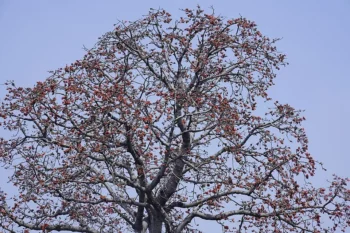
Red Silk Cottontree: A Spectacular Flowering Giant for Warm Climates
If you’ve ever seen a massive tree absolutely covered in brilliant red-orange flowers with not a single leaf in sight, you’ve likely encountered the striking red silk cottontree. This dramatic flowering tree, known botanically as Bombax ceiba, creates one of nature’s most spectacular springtime displays in warm climates around the world.
What Makes the Red Silk Cottontree Special
The red silk cottontree earns its common name from both its showy flowers and the silky cotton fibers that emerge from its seed pods later in the season. You might also encounter this tree under its scientific synonyms Bombax malabaricum or Salmalia malabarica in older gardening references.
What truly sets this tree apart is its flowering behavior. In late winter to early spring, before any leaves appear, the entire canopy explodes with large, cup-shaped flowers that are 3-4 inches across and range from bright red to vibrant orange-red. It’s quite the showstopper!
Size and Growth Characteristics
Let’s be clear about one thing: this is not a tree for small yards. The red silk cottontree is a genuine giant that can reach 60-80 feet in both height and width when mature. The trunk often develops impressive buttresses at the base, giving it an almost prehistoric appearance that adds to its dramatic presence in the landscape.
The growth rate is moderate to fast, especially in optimal conditions, so you won’t be waiting decades to see impressive size, though you will need patience for full maturity.
Where It Comes From
The red silk cottontree is native to tropical and subtropical regions of Asia, including India, Southeast Asia, southern China, and parts of Indonesia and Malaysia. In these regions, it’s often considered a sacred or culturally significant tree and plays important ecological roles.
Climate Requirements and Hardiness
This tropical beauty is strictly for warm climates, thriving in USDA hardiness zones 10-12. If you experience any frost or freezing temperatures in your area, this tree simply won’t survive outdoors year-round. It’s best suited for:
- Southern Florida
- Hawaii
- Southern California (in protected, warm microclimates)
- Areas with consistently warm, tropical conditions
Growing Conditions and Care
Despite its exotic appearance, the red silk cottontree is surprisingly adaptable when it comes to growing conditions, as long as you can provide the warm climate it needs:
Sunlight: Full sun is essential for the best flowering display and healthy growth.
Soil: Adaptable to various soil types, including clay, as long as drainage is adequate. The tree doesn’t appreciate constantly soggy conditions.
Water: Regular watering when young helps establish the root system. Once mature, it can tolerate periods of drought, though consistent moisture promotes better growth and flowering.
Space: This cannot be emphasized enough – give this tree plenty of room! Plant it at least 30-40 feet away from buildings, power lines, and other trees.
Landscape Uses and Design Role
The red silk cottontree works best as:
- A specimen tree in large landscapes
- A focal point in parks or botanical gardens
- Shade tree for expansive properties
- Statement tree in tropical-themed landscapes
It’s definitely not suited for small residential lots, urban streetscapes, or anywhere space is limited.
Wildlife and Pollinator Benefits
The large, nectar-rich flowers are magnets for various pollinators, including bees and, in its native range, sunbirds and bats. While it may not support the same wildlife relationships in non-native locations, the abundant flowers can still provide nectar resources for local pollinators during its blooming period.
Should You Plant a Red Silk Cottontree?
The decision to plant this tree comes down to a few key factors:
Consider it if you have:
- A large property in zones 10-12
- Space for a 60-80 foot tree
- Appreciation for dramatic, tropical-looking specimens
- Interest in unique flowering displays
Look for alternatives if:
- You’re in zones 9 or cooler
- You have limited space
- You prefer to focus on native plants
For those interested in supporting local ecosystems, consider researching native flowering trees in your area that might provide similar aesthetic appeal while offering better ecological benefits for local wildlife.
Planting and Establishment Tips
If you decide this tree is right for your landscape:
- Plant in spring after any chance of cool weather has passed
- Dig a hole only as deep as the root ball but twice as wide
- Water regularly during the first few years of establishment
- Avoid heavy pruning – this tree naturally develops good structure
- Be patient with flowering – young trees may take several years to bloom reliably
The red silk cottontree is undeniably spectacular when it blooms, transforming from a large green giant into a blazing beacon of color. Just make sure you have the space, climate, and patience this impressive tree deserves!