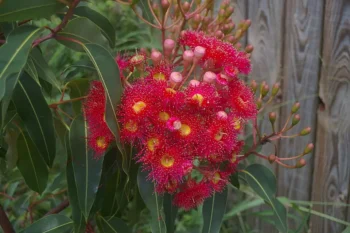
Redflower Gum: A Spectacular Flowering Tree for Warm Climates
If you’ve ever seen a tree absolutely blazing with brilliant red, orange, or pink flowers, chances are you were looking at a redflower gum (Corymbia ficifolia). This eye-catching Australian native has become a beloved ornamental tree in warm climates around the world, and it’s easy to see why gardeners fall head over heels for its spectacular floral display.
What Is Redflower Gum?
Redflower gum is a medium-sized evergreen tree that belongs to the eucalyptus family. Originally known as Eucalyptus ficifolia, botanists reclassified it as Corymbia ficifolia in recent decades. This perennial woody giant typically grows 13-50 feet tall with a single trunk, though environmental conditions can sometimes encourage a shorter, multi-stemmed growth pattern.
What sets this tree apart from its eucalyptus cousins is its absolutely stunning flower display. Large clusters of fluffy, bright blooms burst forth in shades of red, orange, pink, and occasionally white, creating a fireworks-like spectacle that can stop traffic.
Where Does It Come From?
Despite its widespread cultivation, redflower gum has surprisingly humble origins. This tree is native to a tiny slice of southwestern Western Australia, specifically the coastal areas around Albany. In the United States, it has been introduced and now grows wild in Hawaii, where it reproduces spontaneously without human intervention.
- Species observed
- No observations
Why Gardeners Love (and Sometimes Avoid) Redflower Gum
Let’s be honest – the main reason people plant redflower gum is pure, unadulterated wow factor. When this tree blooms (typically in summer), it becomes an absolute showstopper that draws admirers from blocks away. The flowers aren’t just pretty to look at; they’re also magnets for pollinators, attracting bees and birds that add life and movement to your garden.
The tree offers year-round appeal too, with attractive dark green leathery leaves and smooth bark that sheds in patches, creating an interesting mottled pattern on the trunk.
However, there are some considerations before you plant one:
- It’s quite large when mature, so you’ll need adequate space
- It’s not cold-hardy and will struggle in areas with frost
- As a non-native species, it doesn’t provide the same ecological benefits as indigenous plants
- It can be somewhat messy when flowers and seed pods drop
Perfect Garden Settings
Redflower gum works beautifully as a specimen tree where it has room to spread and show off. It’s perfect for:
- Large residential properties with Mediterranean or drought-tolerant landscaping
- Coastal gardens (it tolerates salt air well)
- Parks and public spaces in warm climates
- Street tree plantings in suitable zones
This tree really shines in gardens designed around water conservation and low-maintenance plants.
Growing Conditions and Care
Redflower gum is surprisingly easy to grow if you can provide the right conditions:
Climate: USDA zones 9-11 only – this tree cannot handle frost or prolonged cold
Sunlight: Full sun is essential for the best flowering
Soil: Well-draining soil is crucial; it prefers slightly acidic to neutral pH and will struggle in heavy clay or waterlogged conditions
Water: Drought tolerant once established, but needs regular water during its first year or two
Planting and Care Tips
Spring is the ideal time to plant your redflower gum. Choose a location with plenty of room for growth – these trees can spread 20-30 feet wide at maturity. Here are some key care tips:
- Water regularly until the tree is well-established (usually 1-2 years)
- Apply a thick layer of mulch around the base, keeping it away from the trunk
- Protect young trees from strong winds with stakes if necessary
- Pruning is rarely needed, but remove any dead or crossing branches
- Avoid overwatering mature trees – they prefer to dry out between waterings
Wildlife and Pollinator Benefits
The nectar-rich flowers of redflower gum are fantastic for supporting pollinators, particularly bees. In its native Australia, these trees are important food sources for honeyeaters and other nectar-feeding birds. While non-native birds may not have the same relationship with the tree, you’ll likely still see increased bird and bee activity when it’s in bloom.
Consider Native Alternatives
While redflower gum isn’t considered invasive, choosing native plants when possible provides better support for local ecosystems. If you’re drawn to flowering trees with similar appeal, consider researching native options for your specific region that offer comparable beauty while supporting indigenous wildlife populations.
Redflower gum can be a stunning addition to the right garden in the right climate. Just make sure you have the space, the warm weather, and the appreciation for a tree that knows how to make an entrance!