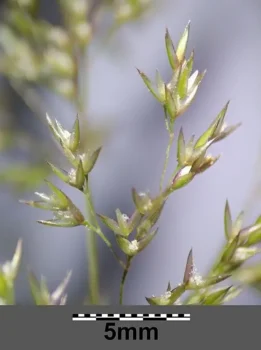
Redtop Grass: A Non-Native Option for Challenging Wet Sites
If you’ve ever struggled with soggy, poorly-drained areas in your landscape, you’ve probably heard someone mention redtop grass (Agrostis gigantea) as a potential solution. This European import has made itself quite at home across North America, establishing in wet meadows, ditches, and anywhere the soil stays consistently moist. But should you actually plant it in your garden? Let’s dig into the details.
What Exactly Is Redtop?
Redtop is a perennial grass that originated in Europe and western Asia. Don’t let the name fool you – the grass itself isn’t particularly red. The common name likely refers to the reddish-brown color of the seed heads or the reddish tinge the foliage sometimes develops. You might also see it listed under several scientific synonyms in older gardening references, including Agrostis alba or Agrostis stolonifera var. major.
This rhizomatous grass forms dense, low-growing mats that rarely exceed 2 feet in height. With its fine-textured green foliage and rapid growth rate, it can quickly colonize wet areas where other grasses struggle to survive.
Where Redtop Grows
Redtop has naturalized throughout most of North America, from Alaska to Newfoundland and down through almost every U.S. state. It’s particularly common in the northern states and Canada, where it thrives in the cooler, wetter climate conditions that remind it of its European homeland.
- Species observed
- No observations
Growing Conditions and Hardiness
One thing redtop has going for it is adaptability to challenging conditions. Here’s what it prefers:
- Soil: Thrives in fine to medium-textured soils, tolerates poor drainage exceptionally well
- Moisture: Loves consistently moist to wet conditions, though has low drought tolerance
- Sun exposure: Full sun preferred, shade intolerant
- pH range: Adapts to acidic soils (pH 4.5-8.0)
- Hardiness zones: 3-9, tolerating temperatures down to -38°F
- Precipitation: Thrives with 28-60 inches annually
Wetland Status
Redtop’s superpower is its ability to handle wet feet. Across most regions, it’s classified as facultative wetland, meaning it usually grows in wetlands but can tolerate drier sites. In Alaska and some western regions, it’s simply facultative, growing equally well in wet and moderately dry conditions.
Should You Plant Redtop?
Here’s where things get complicated. While redtop isn’t currently listed as invasive or noxious, it is a non-native species that spreads readily both by seed and rhizomes. It can be useful in specific situations:
Potential Benefits:
- Excellent for erosion control on wet slopes
- Establishes quickly in problem areas where native plants struggle
- Low maintenance once established
- Tolerates foot traffic reasonably well
- Good fire tolerance
Drawbacks to Consider:
- Non-native species with limited wildlife value
- Can spread aggressively and potentially outcompete native plants
- Offers minimal benefits to pollinators (wind-pollinated with inconspicuous flowers)
- May not fit well in naturalistic or native plant gardens
Native Alternatives to Consider
Before reaching for redtop, consider these native grasses that provide similar benefits with greater ecological value:
- Rice cutgrass (Leersia oryzoides): Excellent for wet areas, provides wildlife food
- Fowl bluegrass (Poa palustris): Tolerates wet soils, supports native wildlife
- Sedges (Carex species): Many wetland sedges offer superior wildlife benefits
- Rushes (Juncus species): Native options for consistently wet areas
If You Do Choose Redtop
Should you decide redtop is right for your specific situation, here’s how to grow it successfully:
Planting:
- Sow seeds in spring after frost danger passes
- Requires at least 90 frost-free days to establish
- Seeds are tiny (nearly 5 million per pound!) so scatter lightly
- No cold stratification needed
- Commercially available from most seed suppliers
Care:
- Keep soil consistently moist during establishment
- Low fertility requirements – avoid over-fertilizing
- Mow annually if desired, though not necessary
- Monitor spread to prevent unwanted colonization
The Bottom Line
Redtop can solve specific landscaping challenges, particularly in wet areas where you need quick establishment and erosion control. However, its non-native status and aggressive spreading habit make it less than ideal for most home landscapes. Before planting, seriously consider native alternatives that provide similar benefits while supporting local ecosystems. If you do choose redtop, be prepared to manage its spread and consider it a utilitarian rather than ornamental choice.
Remember, the best plant for your landscape is often the one that naturally wants to grow there – and in North America, that’s usually going to be a native species that evolved alongside local wildlife and growing conditions.