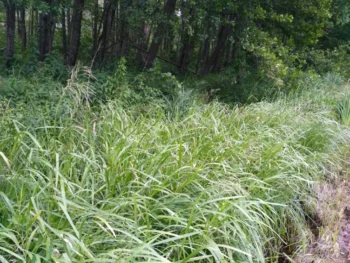
Reed Mannagrass: Why This Wetland Grass Should Stay Out of Your Garden
If you’ve been browsing plants for your water garden or wetland restoration project, you might have come across reed mannagrass (Glyceria maxima). While this impressive grass might look like the perfect solution for wet areas in your landscape, there’s more to this story than meets the eye. Let’s dive into why this particular plant deserves a hard pass from responsible gardeners.
What is Reed Mannagrass?
Reed mannagrass, also known as reed meadow grass or reed sweet grass, is a large perennial grass that thrives in wetland environments. This robust graminoid (that’s garden-speak for grass-like plants) originally hails from Europe and western Asia, but it’s made itself quite at home in North America – perhaps a little too at home, as we’ll discover.
You might also encounter this plant under its scientific synonyms Glyceria spectabilis or Molinia maxima, but regardless of what name it goes by, the story remains the same.
Where You’ll Find Reed Mannagrass
This non-native grass has established populations across several regions in North America, including British Columbia, Ontario, Quebec, Newfoundland, Connecticut, Massachusetts, and Wisconsin. It’s an obligate wetland plant, which means it almost always occurs in wetland environments – think pond edges, marshes, and soggy meadows.
- Species observed
- No observations
The Problem with Reed Mannagrass
Here’s where things get serious: reed mannagrass isn’t just a non-native plant – it’s officially recognized as invasive in multiple states. Connecticut lists it as Potentially Invasive, Prohibited, while both New Hampshire and Wisconsin have slapped it with Prohibited or Prohibited/Restricted status. When multiple states are taking legislative action against a plant, that’s your cue to steer clear.
This grass reproduces spontaneously in the wild and tends to persist without any human help, which sounds great until you realize it means the plant can quickly overtake native wetland communities and disrupt local ecosystems.
Why Gardeners Might Be Tempted
To be fair, reed mannagrass does have some appealing qualities that might catch a gardener’s eye:
- Hardy perennial that thrives in USDA zones 3-9
- Tolerates constantly wet conditions that kill many other plants
- Large, impressive growth habit that can provide structure in water gardens
- Grows well in full sun to partial shade
But here’s the thing – these very qualities that make it seem like a good garden plant are exactly what make it such an effective invader in natural areas.
Better Native Alternatives
Instead of risking the ecological consequences of planting reed mannagrass, consider these native wetland grasses that can provide similar benefits without the invasive baggage:
- Wild rice (Zizania species) – provides food for wildlife and stunning autumn color
- Blue joint grass (Calamagrostis canadensis) – excellent for wet meadows and prairie restorations
- Prairie cordgrass (Spartina pectinata) – tough as nails and perfect for challenging wet sites
- Fowl mannagrass (Glyceria striata) – a native cousin that won’t cause ecosystem disruption
The Bottom Line
While reed mannagrass might seem like an easy solution for wet, difficult-to-plant areas, responsible gardeners should give this one a miss. Its invasive status in multiple states isn’t just bureaucratic red tape – it’s a warning based on real ecological damage this plant can cause.
Your garden is an opportunity to support local ecosystems and native wildlife. By choosing native alternatives, you’re not just creating a beautiful landscape – you’re becoming part of the solution to preserve our natural heritage for future generations. Trust us, your local ecosystem will thank you for it!