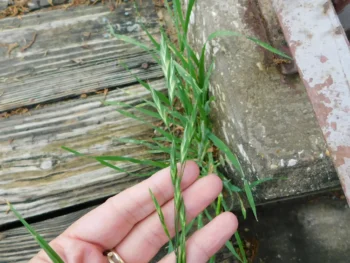
Rescuegrass: Should You Consider This Fast-Growing Annual for Your Garden?
If you’ve ever wondered about that tall, yellow-flowered grass popping up in fields and roadsides, you might be looking at rescuegrass (Bromus catharticus). Also known as prairie grass, this annual grass has quite the story to tell – and some important considerations for gardeners thinking about adding it to their landscapes.
What Exactly Is Rescuegrass?
Rescuegrass is a non-native annual grass that originally hails from South America. Despite its rescue moniker, it’s not here to save your garden – the name actually refers to its historical use as emergency livestock forage. This bunch-forming grass can reach up to 3 feet tall and grows in an upright, erect pattern that’s hard to miss.
You might also hear it called by several other names, and botanically speaking, it goes by quite a few scientific synonyms including Bromus unioloides and Ceratochloa cathartica, among others.
Where Does Rescuegrass Grow?
This adaptable grass has made itself at home across a huge swath of North America. You can find rescuegrass thriving from Alberta down to Florida, and from coast to coast including Hawaii and even some U.S. territories. It’s established populations in dozens of states and provinces, reproducing freely in the wild without any human assistance.
- Species observed
- No observations
The Good, The Bad, and The Grassy
Let’s be honest – rescuegrass isn’t going to win any beauty contests. With its medium-textured green foliage and inconspicuous yellow flowers, it’s more functional than fabulous. Here’s what you need to know:
The positives:
- Extremely fast growth rate
- High seed production for quick establishment
- Tolerates various soil types
- Can handle alkaline soils well
- Active growth during fall, winter, and spring
The drawbacks:
- Short lifespan as an annual
- High water and fertility requirements
- Poor drought tolerance
- Not fire resistant
- Dense summer foliage becomes porous in winter
- Limited wildlife or pollinator benefits
Growing Conditions and Care
If you’re still interested in growing rescuegrass, here’s what it needs to thrive:
Climate Requirements:
- USDA Hardiness Zones 8-10 (minimum temperature tolerance of 7°F)
- At least 80 frost-free days
- Annual precipitation between 18-28 inches
Soil Preferences:
- Coarse to medium-textured soils work best
- pH range of 5.5-8.0
- High fertility requirements
- Good drainage essential (no tolerance for waterlogged conditions)
Care Tips:
- Plant seeds in early spring for best results
- Expect rapid germination with high seedling vigor
- Provide consistent moisture – this grass is thirsty
- Full sun locations only (shade intolerant)
- Plan for reseeding annually since it’s not perennial
Is Rescuegrass Right for Your Garden?
Here’s the straight talk: rescuegrass is more of a utilitarian player than a garden star. It works well for temporary erosion control, quick ground cover in disturbed areas, or forage applications. However, for most ornamental gardens, you’d probably be happier with native alternatives.
Consider these native grass options instead:
- Little bluestem (Schizachyrium scoparium)
- Buffalo grass (Poaceae dactyloides) for western regions
- Purple three-awn (Aristida purpurea)
- Regional native bunchgrasses suited to your specific area
The Bottom Line
Rescuegrass fills a specific niche – fast, temporary ground cover when you need it quickly. While it’s not invasive or particularly problematic, it’s also not contributing much to local ecosystems or pollinators. If you need rapid grass establishment for practical purposes, it can do the job. But for creating beautiful, sustainable landscapes that support local wildlife, native grasses will give you much more bang for your buck – and they’ll look better doing it!
Remember, every plant choice is an opportunity to support local ecosystems. While rescuegrass won’t harm your garden, choosing native alternatives can help create habitat for birds, beneficial insects, and other wildlife that call your region home.