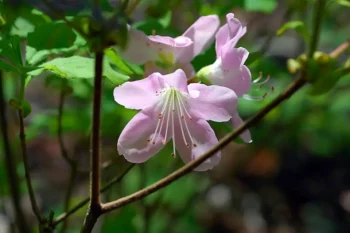
Rhododendron schlippenbachii: The Royal Azalea That’s Worth Getting to Know
Ever stumbled across a plant name that makes your tongue do gymnastics? Meet Rhododendron schlippenbachii – don’t worry, even seasoned gardeners sometimes just call it the Royal Azalea or Korean Rhododendron to save everyone’s sanity! This stunning spring bloomer might have a mouthful of a name, but it’s got the beauty to back up all those syllables.
Where Does This Beauty Come From?
Rhododendron schlippenbachii isn’t a North American native – it hails from the mountainous regions of Korea, northeast China, and far eastern Russia. In its homeland, it graces woodland slopes with its ethereal spring display, earning it royal status among azalea enthusiasts worldwide.
Why Gardeners Fall Head Over Heels
There’s something magical about a plant that knows how to make an entrance, and the Royal Azalea definitely has that figured out. Here’s what makes it special:
- Stunning pale pink to white flowers that appear in early spring before the leaves emerge
- Each bloom features five delicate petals that create an almost ethereal appearance
- Gorgeous fall foliage that transitions from green to brilliant yellows and reds
- Grows into an elegant, naturally rounded shrub reaching 6-15 feet tall and wide
- Relatively slow to moderate growth rate, so it won’t overwhelm your space
Perfect Spots in Your Garden
This Korean beauty isn’t a diva, but it does have preferences. Think of it as the garden equivalent of that friend who’s absolutely delightful once you understand what makes them tick:
- Woodland gardens: Feels right at home under the dappled shade of taller trees
- Foundation plantings: Makes an elegant statement near your home’s entrance
- Asian-inspired landscapes: Perfect for creating that serene, contemplative garden vibe
- Specimen planting: Beautiful enough to stand alone as a focal point
Growing Conditions That Make It Happy
Like many rhododendrons, this Korean native appreciates conditions that mimic its mountainous homeland:
- Light: Partial shade is ideal – morning sun with afternoon protection works beautifully
- Soil: Acidic, well-draining soil rich in organic matter
- Water: Consistent moisture without waterlogged conditions
- Climate: Hardy in USDA zones 4-7, handling both cold winters and moderate summers
Planting and Care Tips for Success
Getting your Royal Azalea established doesn’t require a PhD in horticulture, but a few insider tips will set you up for success:
- Timing: Plant in spring after the last frost for best establishment
- Soil prep: Amend heavy clay or sandy soils with compost or peat moss
- Mulching: Apply a 2-3 inch layer of organic mulch to retain moisture and suppress weeds
- Watering: Deep, infrequent watering is better than frequent shallow drinks
- Pruning: Minimal pruning needed – just remove dead or damaged branches after flowering
- Protection: Shield from strong winds and extreme afternoon sun
Benefits for Pollinators and Wildlife
While this Korean native won’t support the same wildlife as native North American plants, it still offers valuable early-season nectar when many pollinators are just emerging from winter. Bees particularly appreciate the timing of its blooms, which often coincide with their increased activity in spring.
Is This Plant Right for Your Garden?
Rhododendron schlippenbachii can be a gorgeous addition to the right garden, especially if you’re drawn to its elegant spring display and stunning fall color. While it’s not native to North America, it’s not considered invasive either, making it a reasonable choice for gardeners who appreciate its unique beauty.
If you’re prioritizing native plants for ecological benefits, consider native alternatives like native azaleas (Rhododendron species native to your region) or other spring-blooming native shrubs that will provide similar aesthetic appeal while supporting local wildlife more effectively.
Whether you choose this Korean beauty or a native alternative, the key is selecting plants that will thrive in your specific conditions and bring you joy throughout the seasons. After all, a garden should be a place that makes both you and your local ecosystem happy!