Rice Barnyardgrass: A Weedy Visitor You Probably Don’t Want in Your Garden
If you’ve ever spotted a scraggly, somewhat unremarkable grass growing in wet areas of California, you might have encountered rice barnyardgrass (Echinochloa phyllopogon). This annual grass has made itself at home in the Golden State, though it’s definitely not winning any beauty contests in the plant world.
What Exactly Is Rice Barnyardgrass?
Rice barnyardgrass is a non-native annual grass that originally hails from Asia. It’s part of the graminoid family, which is just a fancy way of saying it’s a grass or grass-like plant. This particular species has earned its common name from its notorious reputation as a troublesome weed in rice fields, where it competes aggressively with cultivated rice crops.
You might also see this plant listed under several scientific synonyms in older references, including Echinochloa oryzicola, but Echinochloa phyllopogon is the currently accepted name.
Where Does It Grow?
In the United States, rice barnyardgrass has established itself primarily in California. As a non-native species, it’s managed to reproduce and spread on its own without human assistance, making it a persistent presence in suitable habitats.
- Species observed
- No observations
A Wetland Specialist
This grass has a strong preference for wet conditions. In California’s Arid West region, it’s classified as a facultative wetland plant, meaning it usually shows up in wetlands but can occasionally tolerate drier spots. However, in the Western Mountains, Valleys, and Coast region, it’s considered an obligate wetland plant, which means it almost always needs those consistently moist conditions to thrive.
Should You Plant Rice Barnyardgrass?
Here’s the short answer: probably not. While this grass isn’t officially listed as invasive in most databases, it’s well-known as an agricultural pest that can quickly become problematic. Rice barnyardgrass offers little in terms of ornamental value and can easily outcompete more desirable plants in wet garden areas.
If you’re looking to add native grasses to wetland areas of your landscape, consider these California natives instead:
- California bulrush (Schoenoplectus californicus)
- Creeping wildrye (Leymus triticoides)
- Pacific rush (Juncus effusus var. pacificus)
- Alkali sacaton (Sporobolus airoides)
Identifying Rice Barnyardgrass
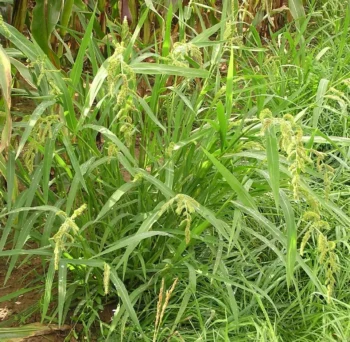
As an annual grass, rice barnyardgrass completes its entire life cycle in one growing season. It typically appears in areas with consistent moisture and can be found growing along irrigation ditches, pond margins, and other wet spots. The plant has a somewhat coarse appearance and lacks the refined look that most gardeners seek in ornamental grasses.
The Bottom Line
While rice barnyardgrass isn’t necessarily harmful to have around, it’s not going to win any awards for garden beauty either. Its weedy nature and tendency to spread make it better suited for wild wetland areas rather than carefully planned landscapes. If you’re dealing with wet areas in your garden, you’ll find much better options among California’s native plant palette – plants that will provide both beauty and ecological benefits while supporting local wildlife.
Remember, the best gardens celebrate the plants that naturally belong in our local ecosystems, and there are plenty of gorgeous native alternatives that will give you a much more rewarding gardening experience!