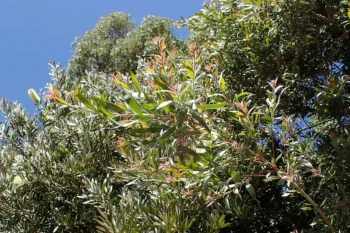
River Bottlebrush: A Stunning Australian Native for Water-Loving Gardens
If you’re looking for a plant that combines striking beauty with practical benefits, meet the river bottlebrush (Callistemon sieberi). This Australian native brings a touch of the wild Down Under to gardens around the world, with its iconic red cylindrical flowers that look exactly like—you guessed it—bottlebrushes!
What Makes River Bottlebrush Special?
The river bottlebrush is a member of the myrtle family and goes by the botanical name Callistemon sieberi. You might occasionally see it listed under its synonym, Callistemon salignus var. australis, but don’t let that confuse you—it’s the same delightful plant.
What sets this beauty apart from other bottlebrush species is its graceful, weeping growth habit and its particular love for moist conditions. While many of its cousins prefer drier spots, the river bottlebrush actually thrives near water sources, making it a fantastic choice for gardeners dealing with wet or poorly drained areas.
Where Does It Come From?
Native to eastern Australia, particularly New South Wales and Queensland, the river bottlebrush naturally grows along riverbanks and in moist woodland areas. In its homeland, it’s perfectly adapted to both flooding and drought conditions—talk about resilient!
Why You’ll Love Growing River Bottlebrush
Here’s what makes this plant a winner in the garden:
- Stunning flowers: Bright red bottlebrush blooms appear throughout the year, with peak flowering in spring and summer
- Wildlife magnet: Those vibrant red flowers are absolute magnets for nectar-feeding birds, especially honeyeaters, plus bees and other beneficial pollinators
- Graceful form: The weeping branches create an elegant, fountain-like silhouette that works beautifully as a specimen plant
- Problem solver: Perfect for those tricky wet spots in your garden where other plants might struggle
- Low maintenance: Once established, it’s quite drought tolerant despite loving moisture
Perfect Garden Roles
The river bottlebrush is incredibly versatile in landscape design. Use it as a stunning specimen tree where its weeping form can be fully appreciated, or plant several for effective screening. It’s absolutely brilliant for erosion control along slopes or near water features, and makes an excellent addition to native plant gardens, Mediterranean-style landscapes, or any water-wise garden design.
Growing Conditions and Care
River bottlebrush is surprisingly adaptable, but it has some preferences:
- Light: Full sun to partial shade (flowers best in full sun)
- Soil: Moist to wet soils, tolerates poor drainage better than most plants
- Climate: Hardy in USDA zones 9-11, making it suitable for warmer regions
- Water: Regular watering, especially when young; mature plants can handle some drought
Planting and Care Tips
Getting your river bottlebrush off to a great start is pretty straightforward:
- Plant in spring when the weather is warming up but not yet scorching
- Choose a spot with good air circulation to prevent fungal issues
- Water regularly for the first year while the root system establishes
- Apply a light pruning after flowering to maintain shape—just tip prune the branches
- Mulch around the base to retain moisture and suppress weeds
- Feed with a low-phosphorus native plant fertilizer if desired
Is River Bottlebrush Right for Your Garden?
River bottlebrush is an excellent choice if you live in zones 9-11 and have a spot that stays consistently moist or even wet. It’s particularly valuable if you’re creating habitat for native wildlife or dealing with drainage challenges in your landscape.
However, if you’re in a colder climate or have very dry conditions, you might want to consider other bottlebrush species that are better suited to your specific situation. For gardeners outside its native range, always check that any Callistemon species you’re considering isn’t listed as invasive in your area.
With its stunning flowers, wildlife benefits, and problem-solving abilities, the river bottlebrush proves that sometimes the best garden solutions come from understanding what plants love most—and giving it to them!