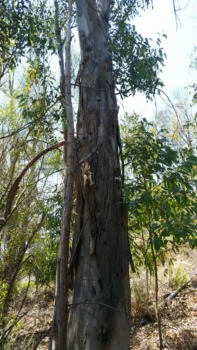
River Red Gum: A Towering Australian Import for Spacious Landscapes
If you’re dreaming of a majestic shade tree that grows faster than your neighbor’s gossip spreads, the river red gum (Eucalyptus camaldulensis) might catch your eye. This Australian native has made itself at home in select parts of the United States, bringing with it both impressive stature and a few considerations worth pondering before you plant.
Meet the River Red Gum
Known by several names including Murray red gum, red gum, and eucalipto-rojo, this perennial tree species hails from the land down under. While it’s native to Australia’s waterways, it has established itself as a non-native resident in California, Florida, Hawaii, and Puerto Rico, where it reproduces naturally and persists without human intervention.
- Species observed
- No observations
Why You Might Fall for This Tree
The river red gum isn’t just another pretty bark—though its smooth, mottled trunk that sheds in attractive patches certainly doesn’t hurt its case. Here’s what makes this tree a standout:
- Rapid growth: This tree doesn’t mess around, reaching 60 feet in just 20 years
- Impressive mature size: Can tower up to 120 feet tall with a commanding presence
- Attractive flowers: Conspicuous yellow blooms appear in early spring
- Long-lived: A true investment tree that will outlast many generations
- Pollinator friendly: Those spring flowers are a hit with bees and other pollinators
The Reality Check
Before you start digging that hole, consider these important factors:
- Space requirements: This tree needs room to breathe—and we mean LOTS of room
- Non-native status: While not invasive, it’s not supporting local ecosystems like native species would
- High water needs: Despite decent drought tolerance, it uses significant moisture
- Allelopathic properties: May inhibit growth of other plants nearby
- Climate limitations: Only thrives in USDA zones 9-11
Perfect Garden Situations
The river red gum shines as a specimen tree in large landscapes, parks, or rural properties where it has space to spread its wings. It works beautifully as:
- A dramatic focal point in expansive yards
- Windbreak plantings (with adequate spacing)
- Shade trees for large outdoor gathering areas
- Drought-tolerant landscape anchors
Growing Conditions That Make It Happy
This adaptable tree is surprisingly flexible about its living conditions:
- Soil: Thrives in coarse, medium, or fine-textured soils with pH between 5.0-8.5
- Water: Can occur in both wetland and non-wetland areas depending on region
- Sun exposure: Intermediate shade tolerance, but prefers full sun
- Temperature: Hardy down to 17°F, needs at least 180 frost-free days
- Drainage: Medium tolerance for both drought and occasional flooding
Planting and Care Tips
Getting your river red gum off to a strong start:
- Sourcing: Seeds are routinely available commercially, or look for container-grown plants
- Spacing: Plant 170-1200 trees per acre depending on your goals
- Establishment: Provide regular water during the first few years despite drought tolerance
- Maintenance: Low fertility requirements, but benefits from deep watering
- Pruning: Has good coppicing potential and resprout ability
Wildlife and Ecological Considerations
While specific wildlife benefits for North American species are unknown, the tree’s spring flowers do attract pollinators. However, as a non-native species, it doesn’t provide the same ecological value as indigenous trees.
Should You Plant It?
If you have a large property in zones 9-11 and want a fast-growing, impressive shade tree, the river red gum could work for your landscape. However, consider exploring native alternatives first—they’ll better support local wildlife and ecosystems while potentially offering similar benefits.
For California, consider coast live oak or valley oak. Florida gardeners might explore southern live oak or bald cypress. These native options will give you that stately presence while supporting the local environment your property calls home.
The river red gum isn’t necessarily a bad choice, but it’s worth asking: in a world full of magnificent native trees, why not plant one that truly belongs?