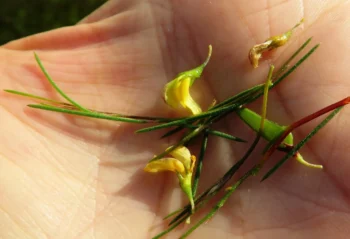
Rooibos: The Drought-Loving Tea Shrub That’s Perfect for Water-Wise Gardens
If you’re looking for a unique, drought-tolerant shrub that doubles as a conversation starter, meet rooibos (Aspalathus linearis). This South African native has been quietly winning over gardeners who want something different from the usual landscape suspects. While you might know rooibos as that caffeine-free red tea in your pantry, this compact shrub offers much more than just beverage potential.
What Makes Rooibos Special?
Rooibos is a charming little shrub that rarely gets taller than 3-6 feet, making it perfect for smaller gardens or as a specimen plant. Its needle-like leaves give it an almost coniferous appearance, but come spring, it surprises you with clusters of tiny yellow flowers that buzz with bee activity. The leaves themselves are the real treasure – they’re what get harvested and processed into that beloved herbal tea.
This plant also goes by the synonyms Aspalathus contaminatus and Borbonia pinifolia, though rooibos is the name that’ll get you the right plant at the nursery.
Where Does Rooibos Come From?
Rooibos calls the Western and Northern Cape provinces of South Africa home, particularly the Cederberg mountains and surrounding fynbos regions. In its native habitat, it thrives in sandy, nutrient-poor soils and endures long dry periods – characteristics that make it surprisingly adaptable to similar conditions elsewhere.
Should You Plant Rooibos in Your Garden?
Here’s the honest truth: rooibos isn’t native to North America, so it won’t provide the same ecological benefits as indigenous plants. However, it’s not invasive either, which means you can grow it without guilt. If you’re dealing with challenging conditions like poor soil, drought, or a Mediterranean climate (USDA zones 9-11), rooibos might be exactly what your garden needs.
That said, if supporting local ecosystems is your priority, consider native alternatives like:
- Desert willow (Chilopsis linearis) for southwestern gardens
- Ceanothus species for California landscapes
- Native salvias for drought-tolerant color
Perfect Garden Scenarios for Rooibos
Rooibos shines in:
- Xeriscape gardens: Its drought tolerance makes it a natural fit
- Mediterranean-style landscapes: Pairs beautifully with lavender, rosemary, and other herbs
- Rock gardens: Thrives in the well-draining conditions
- Container gardens: Perfect size for large pots on patios
- Tea gardens: Grow your own herbal tea ingredients
Growing Rooibos Successfully
Getting the Conditions Right
Think South African mountainside when planning for rooibos:
- Sunlight: Full sun is essential – at least 6-8 hours daily
- Soil: Sandy, well-draining soil with slightly acidic pH (6.0-6.5)
- Water: Low water needs once established; overwatering is its biggest enemy
- Climate: Thrives in USDA zones 9-11; not frost tolerant
Planting and Care Tips
Planting: Spring is your best bet for planting rooibos. Dig a hole twice as wide as the root ball but no deeper. Mix in some coarse sand if your soil doesn’t drain well – this plant would rather be thirsty than have wet feet.
Watering: Water regularly the first year to establish roots, then back off significantly. A deep watering every few weeks during dry spells is usually plenty.
Pruning: Light pruning after flowering helps maintain shape and encourages bushier growth. Don’t go overboard – rooibos doesn’t love heavy pruning.
Fertilizing: Less is more. This plant evolved in nutrient-poor soils, so skip the fertilizer or use a very light application of low-nitrogen plant food.
Wildlife and Pollinator Benefits
While rooibos won’t support native wildlife in the same way indigenous plants do, its small yellow flowers do attract bees and other pollinators during blooming season. It’s a nice addition to a pollinator garden, though you’ll want to include native plants as the foundation.
The Bottom Line
Rooibos is like that interesting friend who’s low-maintenance, drought-tolerant, and always has good stories (or in this case, good tea). It’s not going to be the star of every garden, but in the right conditions – think hot, dry, and challenging – it really shines. Plus, there’s something undeniably cool about harvesting your own tea leaves.
Just remember: if you’re gardening for wildlife and ecosystem support, make native plants your priority and use rooibos as an accent. But if you’re dealing with tough growing conditions and want something unique that won’t cause ecological problems, this South African shrub might just be your perfect match.