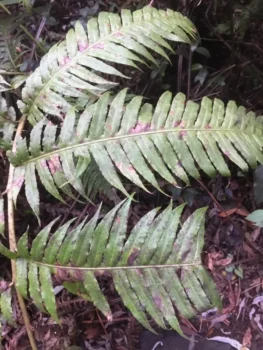
Rooting Chainfern: A Dramatic Non-Native Fern for Wet, Shady Spots
Meet the rooting chainfern (Woodwardia radicans), a show-stopping perennial fern that brings serious drama to wet, shady corners of the garden. This isn’t your typical delicate woodland fern – we’re talking about a bold, architectural plant that can stretch its fronds an impressive 6 to 12 feet long!
What Makes Rooting Chainfern Special?
The rooting chainfern gets its quirky name from its unique party trick: it produces little plantlets right at the tips of its fronds. These baby ferns can root where they touch the ground, creating new plants and expanding the colony naturally. It’s like nature’s own propagation system!
As a non-native species originally from Western Europe and the Macaronesian islands (think Azores, Madeira, and Canary Islands), this fern has found a new home in parts of California and Florida, where it thrives in wet conditions.
- Species observed
- No observations
Should You Plant Rooting Chainfern?
This is where things get interesting. While rooting chainfern isn’t considered invasive or harmful, it’s not native to North America either. Here are some things to consider:
Reasons You Might Love It:
- Creates an instant tropical, lush feeling in shady wet areas
- Excellent for problem spots where nothing else will grow
- Low maintenance once established in the right conditions
- Provides natural propagation through its rooting tips
- Perfect for bog gardens or areas near water features
Things to Keep in Mind:
- It’s not native, so it won’t support local wildlife in the same way native ferns do
- Requires very specific wet conditions to thrive
- Can spread via its rooting frond tips if conditions are right
Native Alternatives to Consider
If you’re leaning toward supporting native ecosystems, consider these fantastic native fern alternatives that love wet conditions:
- Royal fern (Osmunda regalis) – equally dramatic and native to wetlands
- Cinnamon fern (Osmundastrum cinnamomeum) – beautiful rusty-colored fertile fronds
- Sensitive fern (Onoclea sensibilis) – loves wet feet and spreads naturally
Growing Rooting Chainfern Successfully
If you decide this dramatic fern is right for your garden, here’s what it needs to thrive:
Perfect Growing Conditions:
- Water: This fern is classified as Obligate Wetland, meaning it almost always needs wet conditions
- Light: Partial to full shade – think woodland conditions
- Soil: Rich, organic, consistently moist to wet soil
- Humidity: High humidity is a must
- Climate: Hardy in USDA zones 8-10
Planting and Care Tips:
- Choose a spot that stays consistently moist or wet year-round
- Add plenty of organic matter like compost or leaf mold to the soil
- Mulch around the plant to help retain moisture
- Protect from strong, drying winds
- Allow plenty of space – those fronds need room to arch gracefully
Design Ideas for Your Garden
Rooting chainfern works beautifully as:
- A dramatic backdrop in woodland gardens
- An accent plant near ponds or water features
- Part of a bog garden or rain garden
- A specimen plant in large containers (with consistent watering)
The Bottom Line
Rooting chainfern is undeniably gorgeous and can solve the challenge of what to plant in those persistently wet, shady spots. While it won’t provide the same ecological benefits as native alternatives, it’s not considered problematic either. If you love its dramatic look and can provide the wet conditions it craves, it can be a stunning addition to the right garden. Just remember to consider native options first – they’ll thank you by supporting local wildlife while looking just as spectacular!