Rosary Pea: A Beautiful but Dangerous Climbing Vine
Meet the rosary pea (Abrus precatorius), a perennial climbing vine that’s as captivating as it is controversial. With its striking red and black seeds that look like tiny ladybugs, this plant has earned quite a reputation in gardening circles – and not always for the right reasons.
What Makes Rosary Pea Stand Out?
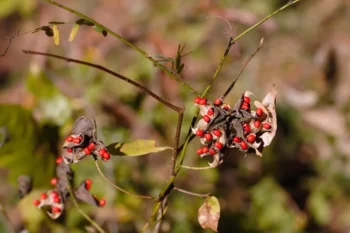
This twining vine is a real climber, with relatively long stems that can be either woody or herbaceous depending on growing conditions. The rosary pea produces delicate compound leaves and small purple or pink flowers that eventually give way to its most famous feature: those glossy, bright red seeds with black spots that look almost too perfect to be real.
Where Does It Grow?
Originally native to tropical regions of Africa and Asia, rosary pea has made itself at home in warmer parts of the United States. You’ll find it growing in Alabama, Arkansas, Florida, Georgia, Hawaii, as well as in Guam, Palau, Puerto Rico, and the Virgin Islands. It’s considered a non-native species that reproduces spontaneously in the wild across these regions.
- Species observed
- No observations
Growing Conditions and Care
If you’re in USDA hardiness zones 9-11, rosary pea can be surprisingly easy to grow:
- Thrives in full sun to partial shade
- Prefers well-draining soil but adapts to various soil types
- Becomes quite drought tolerant once established
- Needs a support structure like a trellis, fence, or arbor for climbing
- Generally classified as obligate upland in most regions, meaning it rarely occurs in wetlands (though it’s more flexible about moisture in Hawaii)
The Serious Safety Warning
Here’s where things get serious: Those beautiful seeds contain abrin, one of the most toxic substances found in nature. Just one seed, if chewed or broken open, can be lethal to humans and pets. Even intact seeds pose risks, especially around curious children who might be tempted by their bead-like appearance.
Garden Design and Landscape Role
When grown safely and responsibly, rosary pea can serve as an ornamental climbing vine in tropical and subtropical gardens. Its small flowers attract bees and butterflies, providing some pollinator benefits. It works well for:
- Covering fences or walls
- Growing on trellises or arbors
- Adding tropical flair to coastal landscapes
Should You Plant Rosary Pea?
This is where gardening gets complicated. While rosary pea isn’t officially listed as invasive in our database, its non-native status and ability to self-seed freely should give you pause. More importantly, the extreme toxicity of its seeds makes it unsuitable for most home gardens, especially those with children, pets, or wildlife visitors.
Better Native Alternatives
Instead of rosary pea, consider these native climbing alternatives:
- American groundnut (Apios americana) for edible tubers and fragrant flowers
- Cross vine (Bignonia capreolata) for spectacular trumpet-shaped blooms
- Coral honeysuckle (Lonicera sempervirens) for hummingbird-attracting flowers
- Virginia creeper (Parthenocissus quinquefolia) for brilliant fall color
The Bottom Line
While rosary pea might catch your eye with its stunning seeds and easy-care nature, the safety risks far outweigh the aesthetic benefits for most gardeners. If you’re drawn to climbing vines with interesting features, you’ll find much safer and more ecologically beneficial options among native alternatives. Your local wildlife – and your peace of mind – will thank you for choosing plants that support rather than potentially harm your local ecosystem.
Remember: beautiful doesn’t always mean suitable for the home garden, and sometimes the most responsible choice is simply admiring a plant from afar.