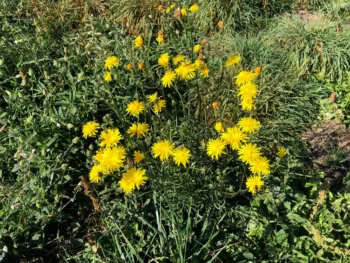
Rough Hawksbeard: A European Wildflower for Casual Gardens
If you’ve ever spotted a plant that looks like a tall, lanky dandelion with bright yellow flowers dancing on slender stems, you might have encountered rough hawksbeard (Crepis biennis). This European native has quietly made itself at home in parts of North America, bringing a touch of old-world charm to meadows and informal gardens.
What is Rough Hawksbeard?
Rough hawksbeard is a perennial forb – essentially a non-woody herbaceous plant that comes back year after year. Despite its name suggesting it’s biennial, this plant typically behaves as a perennial in most growing conditions. It forms a basal rosette of deeply lobed, somewhat rough-textured leaves from which emerge tall, branched flower stems topped with cheerful yellow blooms that resemble small sunflowers or oversized dandelions.
Where Does It Grow?
Originally from Europe and western Asia, rough hawksbeard has established populations across several North American regions. You can find it growing wild in Michigan, New Jersey, New York, North Carolina, Ohio, Pennsylvania, Vermont, and Newfoundland. It’s considered a non-native species that has naturalized in these areas, reproducing on its own without human assistance.
- Species observed
- No observations
Garden Appeal and Design Role
Rough hawksbeard brings several appealing qualities to the right garden setting:
- Bright yellow flowers that bloom from late spring through summer
- Tall, airy growth habit that adds vertical interest
- Casual, cottage garden aesthetic
- Low-maintenance once established
- Attracts pollinators including bees and butterflies
This plant works best in informal settings like meadow gardens, naturalized areas, or cottage-style plantings where its somewhat wild appearance feels at home. It’s not the best choice for formal landscapes or manicured beds where its self-seeding habit might feel too casual.
Growing Conditions and Care
One of rough hawksbeard’s strongest suits is its adaptability. Here’s what it prefers:
- Light: Full sun to partial shade
- Soil: Well-draining soils of various types
- Hardiness: USDA zones 3-9
- Water: Moderate; drought-tolerant once established
Planting and Care Tips
Growing rough hawksbeard is refreshingly straightforward:
- Start from seed in spring or fall
- Seeds germinate easily and the plant self-seeds readily
- Requires minimal care once established
- Consider deadheading spent flowers to control self-seeding
- No special fertilization needed
Should You Plant Rough Hawksbeard?
The decision depends on your gardening goals and style. Rough hawksbeard can be a charming addition to informal gardens, especially if you appreciate its European wildflower character and pollinator benefits. However, since it’s not native to North America, you might consider native alternatives that provide similar aesthetic appeal while supporting local ecosystems.
Some excellent native alternatives include:
- Wild bergamot (Monarda fistulosa)
- Black-eyed Susan (Rudbeckia species)
- Native sunflowers (Helianthus species)
- Goldenrod (Solidago species)
If you do choose to grow rough hawksbeard, be mindful of its self-seeding nature and consider deadheading to prevent it from spreading beyond your intended planting area. While it’s not currently listed as invasive, keeping any non-native plant in check is always good garden practice.
The Bottom Line
Rough hawksbeard offers easy-going charm for casual gardens and reliable pollinator appeal. Whether it’s right for your space depends on your preference for native plants versus introduced species that have found their niche in North American landscapes. Either way, understanding what this yellow-flowered wanderer brings to the garden helps you make the best choice for your unique outdoor space.