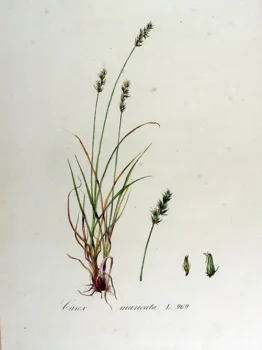
Rough Sedge: A European Transplant for Wet Spots in Your Garden
If you’ve got a soggy corner in your yard that seems impossible to plant, rough sedge (Carex muricata) might catch your eye. This unassuming little sedge has quietly made itself at home in parts of North America, though it originally hails from across the pond in Europe.
What Exactly Is Rough Sedge?
Rough sedge is a perennial grass-like plant that belongs to the sedge family (Cyperaceae). Don’t let the rough in its name intimidate you – it’s actually quite well-behaved in the garden. You might also see it listed under its old scientific names like Carex pairaei, but Carex muricata is the name that stuck.
This little sedge forms neat, small clumps of narrow green leaves topped with modest brownish flower spikes that won’t win any beauty contests but have their own subtle charm. It’s the kind of plant that quietly does its job without demanding attention – perfect for gardeners who appreciate understated elegance.
Where You’ll Find It Growing
Originally from Europe, rough sedge has established populations in several North American locations including New Brunswick, Ontario, Maryland, Michigan, New York, and Pennsylvania. It’s considered a non-native species that reproduces on its own in the wild, though it’s not aggressively invasive.
- Species observed
- No observations
The Wet Spot Solution
Here’s where rough sedge really shines: it’s incredibly adaptable when it comes to moisture. With a facultative wetland status across multiple regions, this sedge is equally happy in wet soil or regular garden conditions. Got a rain garden that needs filling? A boggy area that won’t dry out? Rough sedge might be your answer.
It thrives in USDA hardiness zones 4-8, making it suitable for most temperate climates. Whether you plant it in full sun or partial shade, it tends to adapt without much fuss.
Garden Role and Design Ideas
Rough sedge works best in informal, naturalized settings where its modest appearance can blend seamlessly with other plants. Consider it for:
- Rain gardens and bioswales
- Pond or stream edges
- Naturalized meadow areas
- Ground cover in partially shaded, moist areas
It’s not going to be the star of your flower border, but it makes an excellent supporting player that helps tie plantings together.
Growing and Care Tips
One of rough sedge’s best qualities is how little fuss it requires once established. Plant it in moist to wet soil (though it tolerates drier conditions too), and it’ll generally take care of itself. It may self-seed modestly, and you can divide clumps every few years if you want to spread it around or refresh older plantings.
The maintenance routine is pretty much: plant it, water it until established, then largely forget about it. That’s the kind of gardening we can get behind!
Wildlife and Pollinator Value
Like most sedges, rough sedge is wind-pollinated rather than insect-pollinated, so it won’t be buzzing with bee activity. However, sedges do provide habitat and food sources for various wildlife, particularly birds that may use the seeds and small mammals that appreciate the cover.
The Native Plant Perspective
Since rough sedge isn’t native to North America, you might want to consider native alternatives that provide similar benefits. Native sedges like Carex pensylvanica (Pennsylvania sedge) or Carex vulpinoidea (fox sedge) offer comparable growing conditions and superior wildlife value. These native options support local ecosystems more effectively and are just as easy to grow.
Should You Plant It?
Rough sedge is a perfectly reasonable choice for gardeners dealing with challenging wet conditions, especially in naturalized settings. It’s not invasive, it’s low-maintenance, and it does its job well. However, if you’re focused on supporting local wildlife and ecosystems, native sedge alternatives would be the better choice.
The decision ultimately comes down to your gardening goals: quick solution for a problem spot, or long-term ecosystem building? Either way, you’ll have a plant that knows how to handle whatever moisture challenges your garden throws at it.