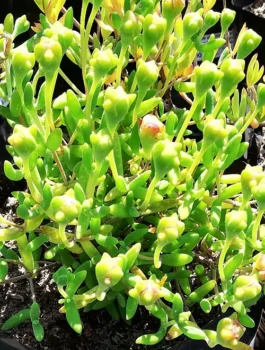
Royal Dewflower: A Colorful Groundcover for Sunny Gardens
Looking for a low-maintenance groundcover that puts on a spectacular floral show? Meet the royal dewflower (Drosanthemum speciosum), a succulent perennial that transforms boring slopes and rocky areas into carpets of vibrant color. While this isn’t a native plant to North America, it has found a comfortable home in California’s Mediterranean climate.
What Exactly Is Royal Dewflower?
Royal dewflower is a spreading succulent that belongs to the ice plant family. This perennial herb forms dense mats of fleshy, small leaves topped with brilliant daisy-like flowers that typically bloom in shades of pink, purple, or magenta. The flowers have an interesting quirk – they only open when the sun is shining, closing up during cloudy weather and at night.
Originally from South Africa’s Western Cape region, this plant has adapted well to similar climates and can now be found growing wild in California, where it reproduces without human assistance.
Where Does It Grow?
In the United States, royal dewflower has established itself primarily in California, where the Mediterranean climate closely matches its native South African habitat. It thrives in coastal areas and inland regions with mild, wet winters and dry summers.
- Species observed
- No observations
Should You Plant Royal Dewflower?
The decision to plant royal dewflower comes down to your specific gardening goals and location. Here’s what you should consider:
Reasons you might love it:
- Stunning flower display during blooming season
- Excellent erosion control on slopes
- Extremely drought tolerant once established
- Low maintenance requirements
- Attracts bees and small pollinators
- Perfect for challenging spots where other plants struggle
Potential drawbacks:
- Not native to North America
- Limited cold tolerance (USDA zones 9-11 only)
- Can spread aggressively in ideal conditions
- Flowers only open in direct sunlight
Native Alternatives to Consider
If you’re committed to native gardening, consider these alternatives that provide similar groundcover benefits:
- California native ice plants like Carpobrotus chilensis
- Native sedums for succulent texture
- Beach strawberry (Fragaria chiloensis) for coastal areas
- Wild ginger (Asarum caudatum) for shadier spots
Growing Royal Dewflower Successfully
Perfect Growing Conditions
Royal dewflower is surprisingly easy to please, but it does have some specific needs:
- Sunlight: Full sun is absolutely essential – this plant won’t bloom in shade
- Soil: Well-draining soil is critical; it prefers poor to moderately fertile conditions
- Water: Drought tolerant once established, but needs regular water during the first growing season
- Climate: Best in USDA hardiness zones 9-11; not frost tolerant
Planting Tips
Plant royal dewflower in spring after the last frost danger has passed. Space plants about 12-18 inches apart if you’re creating groundcover – they’ll fill in quickly. The key to success is excellent drainage; if your soil tends to stay wet, consider raised beds or adding coarse sand and gravel to improve drainage.
Care and Maintenance
One of the best things about royal dewflower is how little fussing it needs:
- Water sparingly once established – overwatering is more harmful than drought
- No fertilizer needed; rich soil actually reduces flowering
- Occasional light pruning helps maintain shape and encourages fresh growth
- Remove spent flowers if you want to prevent self-seeding
Design Ideas for Your Garden
Royal dewflower shines in specific garden situations:
- Slope stabilization: Its spreading habit makes it excellent for erosion control
- Rock gardens: Complements stones and boulders beautifully
- Mediterranean gardens: Fits perfectly with lavender, rosemary, and olive trees
- Coastal gardens: Handles salt air and sandy soils with ease
- Xeriscapes: Ideal for water-wise landscaping
The Bottom Line
Royal dewflower can be a valuable addition to the right garden – particularly if you’re dealing with challenging conditions like poor soil, slopes, or drought. Its spectacular flowers and low-maintenance nature make it appealing to many gardeners. However, as a non-native species that can spread readily, it’s worth considering whether native alternatives might better serve both your garden and local ecosystem.
If you do choose to plant royal dewflower, enjoy its brilliant display while being mindful of its spreading tendency. With proper placement and occasional management, it can provide years of colorful, low-maintenance groundcover in suitable climates.