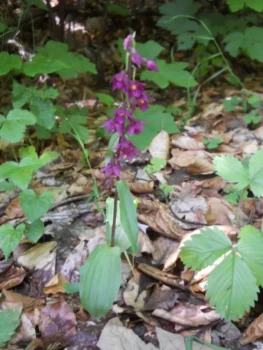
Royal Helleborine: A Rare European Orchid in American Gardens
Meet the royal helleborine (Epipactis atrorubens), a mysterious and uncommon orchid that’s made its way from European mountainsides to a small corner of Vermont. This intriguing perennial forb isn’t your typical garden center find, but for orchid enthusiasts and adventurous gardeners, it represents one of nature’s more elusive beauties.
What Makes Royal Helleborine Special?
This non-native orchid stands out with its distinctive spikes of small, burgundy to reddish-brown flowers that bloom in summer. Each flower displays the classic orchid form with intricate petals and sepals in deep, rich tones that seem almost mysterious in woodland settings. The plant grows as an herbaceous perennial, meaning it dies back to the ground each winter and returns the following spring.
Where You’ll Find It
Originally from Europe and parts of Asia, royal helleborine has established itself in Vermont, where it reproduces naturally without human intervention. This limited distribution makes it quite rare in North American gardens.
- Species observed
- No observations
Should You Grow Royal Helleborine?
Here’s where things get interesting – and challenging. While royal helleborine isn’t listed as invasive, it’s also not a plant for the average gardener. This orchid has very specific needs that make it notoriously difficult to cultivate successfully.
The Reality Check:
- Extremely difficult to grow and establish
- Requires specific soil fungi (mycorrhizal associations) to survive
- Rarely available from commercial sources
- Best suited for experienced orchid growers
Growing Conditions and Care
If you’re determined to try growing royal helleborine, here’s what this finicky beauty demands:
Ideal Conditions:
- Soil: Well-drained, alkaline soil with specific fungal partners
- Light: Partial to full shade
- Moisture: Cool, consistently moist conditions
- Climate: Hardy in USDA zones 4-7
- Disturbance: Minimal – once planted, leave it completely alone
Care Tips:
- Never attempt to transplant wild specimens
- Source only from reputable, conservation-minded suppliers
- Provide consistent moisture without waterlogging
- Avoid fertilizers, which can disrupt fungal relationships
- Be patient – establishment can take years
Native Alternatives to Consider
Since royal helleborine presents significant growing challenges and isn’t native to North America, consider these gorgeous native orchid alternatives that support local ecosystems:
- Pink Lady’s Slipper (Cypripedium acaule) – iconic woodland orchid
- Wild Ginger (Asarum canadense) – similar woodland habitat with interesting flowers
- Bloodroot (Sanguinaria canadensis) – spring woodland beauty
- Trout Lily (Erythronium americanum) – elegant woodland perennial
Pollinator and Wildlife Benefits
Royal helleborine attracts specialized pollinators, primarily small flies, though its pollination relationships are quite specific. While it may provide some benefit to local insects, native plants will always offer superior support for regional wildlife and pollinators.
The Bottom Line
Royal helleborine is undeniably fascinating – a rare European orchid that’s managed to establish itself in Vermont’s landscape. However, unless you’re an experienced orchid grower with patience, specialized knowledge, and access to properly sourced plants, this beauty might be better appreciated in its natural habitat or specialized botanical collections.
For most gardeners seeking woodland elegance and orchid-like appeal, native alternatives will provide better success, easier care, and greater ecological benefits. Sometimes the most beautiful gardens are those that celebrate the native treasures already adapted to our local conditions.