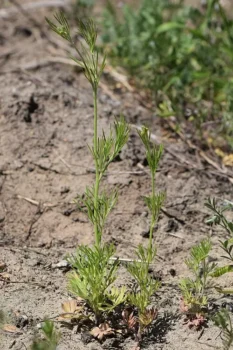
Royal Knight’s-Spur: A Charming Annual with Old-World Appeal
If you’re looking to add some cottage garden charm to your landscape, royal knight’s-spur (Consolida regalis) might just catch your eye. This delicate annual, also known by its former scientific name Delphinium consolida, brings tall spikes of colorful flowers and feathery foliage to gardens across North America—though it’s not originally from here.
What Is Royal Knight’s-Spur?
Royal knight’s-spur is an annual forb, meaning it’s a non-woody herbaceous plant that completes its entire life cycle in one growing season. Originally from the Mediterranean region and parts of Europe, this charming plant has made itself at home in many North American gardens and has even naturalized in some areas.
The plant produces tall, graceful spikes adorned with delicate flowers in shades of blue, purple, pink, or white. Its finely divided, almost feathery foliage adds texture to garden beds and provides an excellent backdrop for the showy flower spikes.
Where You’ll Find It Growing
While not native to North America, royal knight’s-spur has established populations across several states and provinces. You can find it growing in Alabama, Connecticut, the District of Columbia, Illinois, Maryland, Missouri, Montana, New Jersey, New York, North Carolina, Ohio, Pennsylvania, Rhode Island, and Ontario, Canada. It reproduces on its own in the wild and tends to persist once established.
- Species observed
- No observations
Garden Appeal and Design Uses
Royal knight’s-spur brings several appealing qualities to the garden:
- Tall, elegant flower spikes that make excellent cut flowers
- Delicate, fern-like foliage that adds texture
- A range of flower colors from deep blue to soft pink
- Old-fashioned cottage garden charm
- Self-seeding habit that creates naturalized drifts
In landscape design, royal knight’s-spur works beautifully as a background plant in mixed borders, adds vertical interest to cottage garden schemes, and creates lovely drifts in wildflower gardens. It’s particularly stunning when planted in masses or allowed to self-seed throughout a garden bed.
Growing Conditions and Care
Royal knight’s-spur is relatively easy to grow and quite forgiving. Here’s what it prefers:
- Sunlight: Full sun for best flowering
- Soil: Well-drained soil of average fertility
- Water: Moderate moisture; drought tolerant once established
- Climate: Prefers cooler weather and can be grown as an annual in USDA zones 2-11
Planting and Care Tips
Getting royal knight’s-spur established in your garden is straightforward:
- Direct sow seeds in fall or early spring when temperatures are cool
- Seeds need cool temperatures to germinate properly
- Space plants about 6-12 inches apart
- Once established, the plant often self-seeds for next year’s display
- Deadhead spent flowers to prolong blooming or leave them to set seed
- Little maintenance required once growing
Pollinator and Wildlife Benefits
Royal knight’s-spur does provide some benefits to local wildlife, particularly as a nectar source for bees, butterflies, and other pollinating insects. The flowers’ tubular shape makes them accessible to various pollinators, though the plant’s non-native status means it may not support the full range of local wildlife that native alternatives would.
Should You Plant It?
Royal knight’s-spur can be a lovely addition to gardens, especially if you’re creating a cottage garden or wildflower meadow aesthetic. Since it’s not considered invasive or problematic, gardeners can feel comfortable growing it. However, since it’s not native to North America, you might also consider incorporating some native alternatives alongside it.
Some beautiful native alternatives that provide similar vertical interest and pollinator benefits include wild bergamot (Monarda fistulosa), wild lupine (Lupinus perennis), or blazing star species (Liatris spp.), depending on your region.
The Bottom Line
Royal knight’s-spur offers old-world charm and easy-care beauty for gardeners who appreciate cottage garden style. While it’s not native to our continent, it’s not causing ecological problems either. If you choose to grow it, you’ll enjoy its graceful spikes of colorful flowers and the butterflies and bees that visit them. Just remember to leave some space for native plants too—your local wildlife will thank you for it!