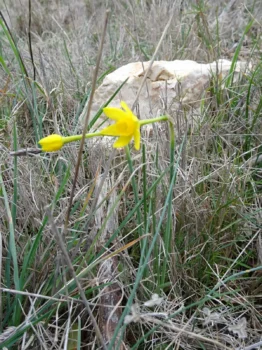
Rushleaf Jonquil: A Charming Early Spring Bloomer
If you’re looking for a petite spring charmer that brings sunshine to your garden when winter’s grip is just loosening, the rushleaf jonquil (Narcissus assoanus) might catch your eye. This delicate member of the daffodil family offers something a bit different from the bold, trumpet-faced cousins we typically see dotting spring landscapes.
What Makes Rushleaf Jonquil Special?
The rushleaf jonquil is a perennial forb that stands out for its understated elegance. Unlike the flashy daffodils that demand attention, this little beauty whispers rather than shouts. Its narrow, rush-like leaves give the plant its common name, while small, fragrant yellow flowers – typically one or two per stem – provide a sweet welcome to the growing season.
This plant goes by the botanical name Narcissus assoanus and may sometimes be listed under the synonym Narcissus juncifolius in older garden references, though that’s technically a different species.
Where It Comes From and Where It Grows
Originally hailing from Spain and Portugal on the Iberian Peninsula, the rushleaf jonquil has made itself at home in parts of the southeastern United States. In the U.S., it’s been documented as naturalized in Louisiana, where it reproduces on its own without human intervention.
- Species observed
- No observations
Since this is a non-native species, you might want to consider native alternatives like wild ginger, bloodroot, or native violets that provide similar early spring interest while supporting local ecosystems.
Garden Appeal and Design Role
The rushleaf jonquil brings several appealing qualities to the garden:
- Early bloom time provides nectar when few other flowers are available
- Compact size makes it perfect for rock gardens and small spaces
- Naturalizes well in grass areas for a meadow-like effect
- Fragrant flowers add sensory appeal
- Low maintenance once established
This plant works beautifully in Mediterranean-style gardens, naturalized areas, and rock gardens. Its delicate appearance makes it ideal for intimate garden spaces where its subtle charm can be appreciated up close.
Growing Conditions and Care
One of the rushleaf jonquil’s best features is its easy-going nature. Here’s what it needs to thrive:
Climate: Hardy in USDA zones 6-9, making it suitable for much of the southeastern and mid-Atlantic regions.
Sunlight: Prefers full sun to partial shade. Morning sun with some afternoon protection works well in hotter climates.
Soil: Well-draining soil is essential. This plant abhors soggy conditions and will rot if water sits around the bulbs. Sandy or gravelly soils work particularly well.
Water: Drought tolerant once established, but appreciates moderate moisture during the growing season.
Planting and Care Tips
Getting started with rushleaf jonquil is straightforward:
- When to plant: Fall planting is best, typically October through November
- Planting depth: Set bulbs 3-4 inches deep
- Spacing: Allow 3-4 inches between bulbs
- Soil preparation: Improve drainage with compost or sand if your soil is heavy
- Ongoing care: Minimal fertilizing needed; allow foliage to die back naturally after blooming
Once established, these little bulbs are remarkably self-sufficient. They’ll multiply slowly over time, creating larger drifts of early spring color.
Wildlife and Pollinator Benefits
Early-blooming flowers like the rushleaf jonquil provide valuable nectar sources when pollinators are just becoming active. Bees and other beneficial insects appreciate these early energy sources as they emerge from winter dormancy.
Is Rushleaf Jonquil Right for Your Garden?
This charming little bulb could be a good fit if you:
- Want early spring color with minimal maintenance
- Have well-draining soil and aren’t in a consistently wet area
- Appreciate subtle, fragrant flowers over bold displays
- Are creating a Mediterranean or naturalized garden style
- Want to provide early nectar sources for pollinators
However, since it’s non-native, consider pairing it with or choosing instead native early bloomers like spring beauty, bloodroot, or native crocuses that provide similar benefits while supporting local wildlife more comprehensively.
Whether you choose the rushleaf jonquil or native alternatives, adding early spring bloomers to your garden creates a bridge from winter’s dormancy to the full flush of spring – and your local pollinators will thank you for it.